From health dependency to health ownership: why Africa’s biggest public-health conversation in 2026 is about who produces knowledge, who finances health systems, who manufactures essential products, and who ultimately controls the continent’s health future
By Ayele Addis Ambelu, (African Union Media Fellow and African CDC Health Journalists fellow) ADDIS ABABA, Ethiopia, 18 August 2026
Africa is preparing for a public-health gathering that is increasingly becoming more than a conference.
The 5th International Conference on Public Health in Africa (CPHIA 2026) is being positioned as a continental test of whether Africa can move from being predominantly a consumer of externally generated health knowledge, technologies, financing and interventions to becoming a stronger producer, decision-maker and owner of its own public-health future.
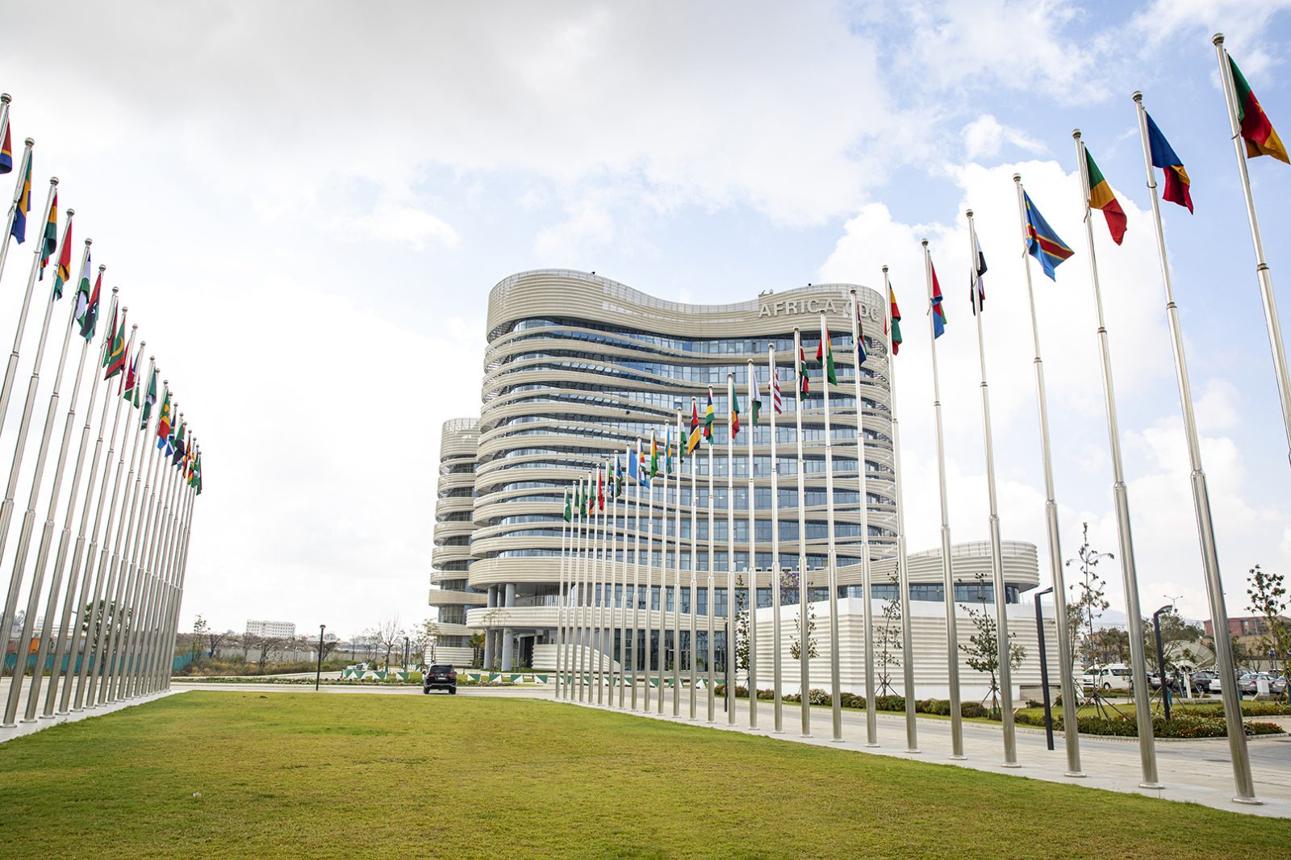
Scheduled for 23–27 November 2026 in Addis Ababa, CPHIA 2026 will be co-hosted by the Africa Centres for Disease Control and Prevention (Africa CDC) and the Government of Ethiopia. Organisers expect more than 30,000 participants, bringing together political leaders, scientists, policymakers, innovators, civil society, private-sector actors and health professionals.
Its theme could hardly be more politically and strategically consequential:
“Africa’s Health Security and Sovereignty: Transformation from health dependency and vulnerability to ownership and resilience.”
The language is important.
This is not simply another discussion about improving healthcare delivery. It is a debate about power—the power to produce vaccines and medicines, generate evidence, finance health priorities, develop technologies, train and retain health workers, manage health emergencies and determine which health policies best serve African populations.
The question emerging from CPHIA 2026 is therefore much larger than whether Africa can respond to the next pandemic.
Can Africa build the capacity to prevent the next crisis—and increasingly control the systems required to protect itself?
A conference that reflects a changing Africa
For decades, African public health has frequently operated within an international system in which much of the financing, research infrastructure, pharmaceutical production, technological capacity and agenda-setting power has been concentrated outside the continent.
Africa has benefited enormously from international partnerships. But the COVID-19 pandemic exposed the vulnerabilities of excessive dependence.
When demand for vaccines, diagnostics, personal protective equipment and other essential health products surged, countries across Africa faced difficult questions about supply, financing, production and access.
The pandemic therefore left behind a strategic lesson: health security cannot depend entirely on the goodwill, production capacity or political priorities of others.
That lesson is now becoming institutionalised in the African health agenda.
Africa’s health-security and sovereignty agenda is increasingly focused on domestic financing, stronger institutions, continental preparedness, digital transformation and local manufacturing. A February 2026 communiqué issued at the African Union’s 39th Ordinary Session, for example, emphasised the need to invest in the health workforce, community health and sustainable immunisation programmes while recognising the continent’s continuing exposure to public-health emergencies, climate shocks and humanitarian crises.
CPHIA 2026 arrives against that backdrop.
Its significance lies not merely in bringing thousands of health professionals together, but in providing a continental platform where Africa’s health priorities can be debated through an African institutional and scientific lens.

From dependency to sovereignty
The word “sovereignty” is perhaps the most consequential word in the CPHIA 2026 theme.
Health sovereignty does not mean Africa should isolate itself from the global health system.
Rather, it raises a more practical question: Can African countries participate in global health partnerships from a position of greater capability, ownership and bargaining power?
True sovereignty would mean that African countries are able to make informed decisions based on African evidence, finance an increasing share of their own priorities, manufacture critical health products, maintain functioning surveillance systems and deploy trained health workers where they are needed.
It would also mean that African researchers are not merely collecting data for international institutions but are increasingly leading research agendas, setting research questions and translating scientific findings into policy.
This is precisely why the scientific component of CPHIA matters.
The official CPHIA 2026 programme identifies scientific sessions, policy dialogue, innovation, financing and partnership as central components of the gathering. Its programme includes tracks on global health governance, pandemic prevention and response, innovative financing, primary healthcare and digital transformation, local manufacturing, and climate and health resilience.
Those tracks reveal the breadth of the sovereignty question.
Who sets the agenda? Who pays? Who researches? Who manufactures? Who owns the technology? Who controls the data? Who trains the workforce? And who makes the final decisions?
These are ultimately questions about health sovereignty.
Africa’s scientists must be at the centre
One of the most important features of CPHIA 2026 is its emphasis on scientific evidence.
The conference’s scientific committee is responsible for developing the scientific agenda, selecting themes, overseeing abstract review and identifying speakers. Its membership brings together African and international public-health experts working across epidemiology, health systems, primary healthcare, infectious diseases, climate and health, digital health and innovation.
This matters because sovereignty without knowledge is fragile.
A continent cannot sustainably control its health destiny if it remains dependent on external institutions to tell it what its most urgent problems are, what interventions should be prioritised and which solutions are appropriate.
African research institutions are therefore not peripheral to the health-sovereignty project. They are its intellectual foundation.
The more African universities, public-health institutes, laboratories and researchers generate high-quality evidence, the greater Africa’s ability to influence policy not only nationally but globally.
The scientific programme can consequently become one of CPHIA 2026’s most important legacies.
The manufacturing question: can Africa produce what it needs?
Perhaps nowhere is health dependency more visible than in manufacturing.
Africa’s ambition to strengthen pharmaceutical, vaccine, diagnostic and medical-product manufacturing is not simply an industrial-policy issue.
It is a national and continental security issue.
The CPHIA programme explicitly identifies “Unlocking opportunities for local manufacturing in Africa” as one of its major tracks, describing manufacturing capacity as central to building health security on the continent.
The implications are enormous.
Local manufacturing can reduce exposure to international supply disruptions, create skilled employment, stimulate research and development and strengthen regional value chains.
But manufacturing alone is not enough.
Africa also needs regulatory systems capable of ensuring quality, financing mechanisms capable of supporting production, procurement systems that create predictable markets, research institutions capable of developing products and skilled professionals capable of sustaining the entire ecosystem.
In other words, health sovereignty requires an ecosystem not a factory in isolation.
Financing may determine whether sovereignty becomes reality
The most ambitious health strategy can collapse without sustainable financing.
Africa’s health systems face competing demands: infectious diseases, non-communicable diseases, maternal and child health, mental health, climate-related emergencies, ageing populations, humanitarian crises and pandemic preparedness.
At the same time, many governments face severe fiscal constraints.
That makes CPHIA’s financing agenda particularly important.
The conference includes a dedicated track focused on predictable, innovative and blended financing, with an emphasis on empowering African stakeholders and strengthening sustainable financing for universal health coverage.
The underlying question is uncomfortable but unavoidable:
Can health sovereignty be achieved while the financing of essential health systems remains heavily dependent on external assistance?
External partnerships will remain important. Africa cannot and should not—turn away from international cooperation.
But partnership is different from dependency.
The strategic objective should increasingly be to move from donor-recipient relationships toward co-investment, shared accountability and African ownership.
Digital transformation and AI could change the equation
Another major feature of CPHIA 2026 is the attention given to digital transformation and artificial intelligence.
The conference programme specifically identifies digital transformation and AI-enabled health systems as a major track.
This could become one of the most transformative areas of the conference.
AI can potentially support disease surveillance, clinical decision-making, health-system management, diagnostics, research and public-health forecasting.
But there is another sovereignty question hidden inside the AI debate:
Who owns Africa’s health data?
If African populations generate enormous amounts of health data while the infrastructure, algorithms and commercial value associated with that data are controlled elsewhere, digitalisation could reproduce old patterns of dependency in a new technological form.
African health sovereignty in the digital age therefore requires more than access to AI tools.
It requires African capacity to govern data, develop appropriate technologies, establish ethical safeguards and ensure that digital innovation responds to African realities.
Climate change is becoming a health-security issue
CPHIA 2026 also places climate and health security among its major programme areas.
That reflects another fundamental shift.
Climate change is no longer simply an environmental concern. For Africa, it is increasingly a public-health issue involving infectious disease patterns, food security, water availability, displacement, extreme weather and pressure on already stretched health systems.
The conference’s climate-health track explicitly links climate change, One Health and African resilience.
This means future health security cannot be separated from environmental resilience.
A health system that can treat disease but cannot anticipate climate-related shocks remains vulnerable.
Primary healthcare: sovereignty begins with communities
There is also a danger in making health sovereignty exclusively about national institutions, laboratories and governments.
Health security ultimately begins with communities.
Primary healthcare is therefore fundamental.
The CPHIA programme identifies primary healthcare, digital transformation and AI-enabled health systems as a major area of discussion, while the scientific leadership includes specialists working on community health and health-system strengthening.
A sophisticated national laboratory cannot compensate for a weak community-health system.
A continent may possess advanced hospitals yet remain vulnerable if people cannot access basic preventive services, immunisation, maternal care, health information and early detection.
The real measure of health sovereignty will therefore not simply be the number of laboratories or vaccines produced.
It will also be whether ordinary Africans are healthier, better protected and able to access quality healthcare when they need it.
Ethiopia’s opportunity and responsibility
For Ethiopia, hosting CPHIA 2026 carries particular significance.
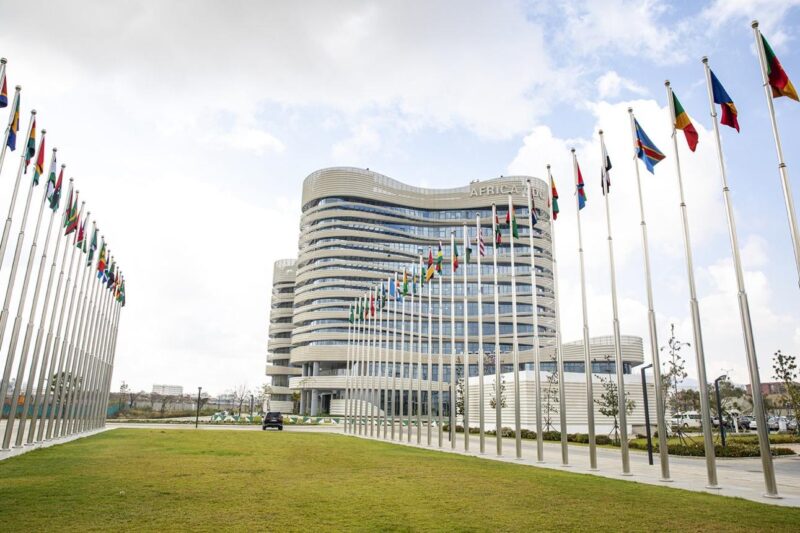
Addis Ababa is not only Ethiopia’s capital. It is the headquarters of the African Union and a major centre of continental diplomacy and African institutional leadership.
Hosting one of Africa’s largest public-health gatherings gives Ethiopia an opportunity to place its own scientific community, health institutions, innovators and policy experience within a continental conversation.
But hosting is not itself the achievement.
The greater opportunity is what Ethiopia and other African countries do with the ideas emerging from the conference.
CPHIA 2026 should therefore generate conversations that continue beyond conference halls.
For Ethiopian journalists, universities, policymakers, civil society organisations and health institutions, the conference offers an opportunity to examine questions such as:
How prepared are national systems for future outbreaks?
How much of the country’s essential health supply chain can be produced domestically?
How can Ethiopia retain highly trained health professionals?
How can research findings be translated into policy?
How can AI and digital technologies strengthen—not replace—human-centred healthcare?
And how can communities become active participants rather than passive recipients of public-health decisions?
These are stories that deserve sustained media attention.
The media cannot remain outside the health-sovereignty debate
The success of CPHIA 2026 should not be measured only by the number of delegates, scientific papers or political speeches.
It should also be measured by whether the ideas discussed reach the public.
That places a major responsibility on African media.
Health journalism has traditionally focused heavily on outbreaks, deaths, disease statistics and emergencies. Those stories remain essential, but health sovereignty requires a broader journalism agenda.
The media must ask where medicines come from.
Who finances health programmes?
Who produces vaccines?
Where does health data go?
Why do health workers leave?
What happens to research after publication?
Which African innovations are succeeding?
Which policies are failing?
And, perhaps most importantly, are governments and institutions delivering on their health-security commitments?
This is where CPHIA 2026 can become more than a conference.
It can become a continental accountability story.
From speeches to measurable commitments
The greatest risk facing the health-sovereignty agenda is not lack of ambition.
It is the gap between ambition and implementation.
Africa has no shortage of declarations, strategies and commitments.
The challenge is turning them into functioning institutions, sustainable financing, laboratories, supply chains, trained health workers, research programmes, manufacturing capacity and accessible healthcare.
CPHIA 2026 therefore needs to answer a simple question:
What changes after the conference?
If the answer is measurable, the conference could mark a significant milestone.
If not, the language of sovereignty risks becoming another powerful slogan without sufficient practical transformation.
The conference’s own emphasis on policy, science, financing, manufacturing, digital transformation and resilience suggests that the organisers recognise this implementation challenge.
A new bargain for African health
Ultimately, CPHIA 2026 represents an emerging new bargain.
Africa does not need to reject international partnerships.
It needs to renegotiate the terms of partnership around stronger African ownership.
The future should not be a choice between isolation and dependence.
It should be partnership based on capability.
African governments need to invest.
Universities need to generate knowledge.
Scientists need stronger research ecosystems.
Industries need to manufacture.
Young people need opportunities.
Communities need a voice.
The private sector needs incentives to invest responsibly.
And the media needs to hold every actor accountable.
That is what health sovereignty means in practice.
The real test begins after November
The countdown to November has already begun.
The official CPHIA 2026 platform presents the gathering as five days of scientific presentations, high-level policy dialogue, innovation, investment, partnerships and networking, with more than 30,000 participants expected.
But the real test will begin when those five days are over.
Will African governments increase domestic health investment?
Will local manufacturing expand?
Will African researchers gain greater influence over research priorities?
Will health workers receive the support necessary to remain in African health systems?
Will digital technologies be governed in Africa’s interests?
Will primary healthcare receive the resources it requires?
Will communities have greater influence over health decisions?
And will the continent be better prepared for the next health emergency?
Those are the questions that should define the journalism around CPHIA 2026.
Africa has already demonstrated that it can build continental institutions, produce world-class scientists and develop innovative responses to complex health challenges.
The next step is to turn those capabilities into durable systems of ownership and resilience.
CPHIA 2026 is therefore not simply asking whether Africa is ready to respond to the next crisis.
It is asking whether Africa is ready to lead its own health future.
And perhaps that is the most important story to tell from Addis Ababa this November.
Africa is ready to lead. The real question is whether the continent will now build the systems, financing, knowledge, technology and political commitment required to make that leadership permanent.