INVESTIGATIVE LONG-READ | MIGRATION, HUMAN TRAFFICKING AND LABOUR EXPLOITATION
By Ayele Addis Ambelu Africa News Channel — The Voice of Africans


The journey begins with a promise of work, dignity and a better life. But for some of Eritrean, Sudanese, Kenyan, Ugandan and Ethiopia’s most vulnerable young people, the search for opportunity leads into a shadow economy of deceptive recruiters, mounting debts, dangerous crossings and exploitation. Following the evidence from rural households to the Eastern Route and overseas workplaces reveals how trust can be monetized and why the people with the least power often pay the highest price.
Prologue: The promise that never arrives
A telephone rings in a household in Ethiopia. A parent answers, hoping for good news from a son or daughter who left home in search of work.
The caller may be a stranger. The voice may belong to someone who claims to have met the young migrant along the journey. The message may be that the traveller has reached a transit point, encountered a problem or needs money to continue.
Sometimes the family is told that the migrant is safe but stranded. Sometimes the caller demands payment. Sometimes the family is warned that failure to send money will have consequences.
The parents must decide what to believe.
They may have already sold livestock, borrowed money from relatives or exhausted savings to finance the journey. Their child may have promised to repay the debt after finding employment abroad. Now, instead of receiving money, the family is being asked to send more.
They may not know the caller’s identity, the migrant’s exact location or whether the demand is genuine. They may not know which authority to contact or whether reporting the matter could expose their relative to detention, retaliation or other consequences.
Yet they send the money, if they can.
For the family, the decision is not simply financial. It is an attempt to protect someone whose safety has become uncertain.
This is one of the most painful dimensions of migration-related exploitation: the people at home may become financially entangled in the very circumstances they are trying to resolve.
The promise that began the journey may have been simple. A job. A salary. A chance to support parents, educate siblings, escape poverty or rebuild a life disrupted by insecurity.
The consequences can be much more complicated.
An individual may have travelled voluntarily but later been deceived about the work available. A young person may have paid a broker who concealed the actual route. Someone may have entered a country irregularly and then encountered extortion, confinement or violence. A worker recruited for a legitimate job may discover that the conditions have changed after arrival.
These situations are not legally identical. Some involve fraud, some involve migrant smuggling, and some may amount to human trafficking. In other cases, people experience dangerous journeys without evidence that a recruiter deceived them.
But a common question runs through the stories: who benefits when a vulnerable person’s hope becomes someone else’s source of income?
The answer cannot be found by blaming migrants for travelling, nor by assuming that every broker is a criminal. It requires investigating the chain of decisions, promises, payments and transfers that can leave a person exposed to exploitation.
The International Organization for Migration (IOM) describes the Horn of Africa–Yemen corridor as one of the world’s busiest and riskiest migration routes. Its monitoring has documented deaths, abuse, extortion, inadequate food and water, and the particular vulnerabilities of children travelling without adult companions.
And the danger is not merely a historical warning.
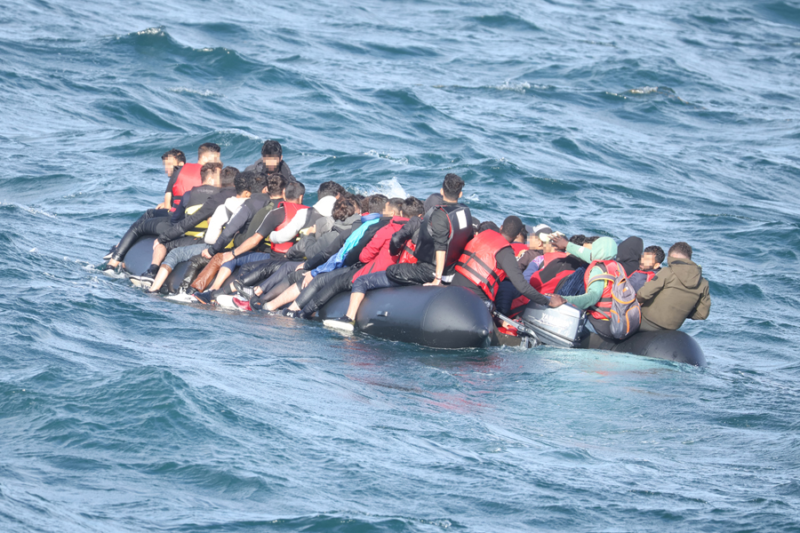
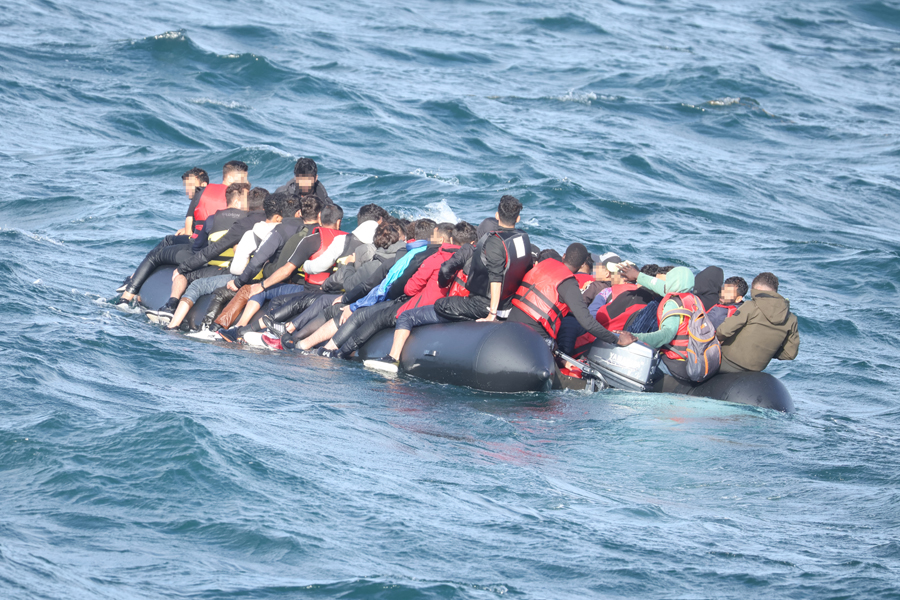
a migrant boat travelling from Djibouti toward Yemen capsized near Guhere, north of Obock. 139 people had died and 84 remained missing, with 82 survivors reported. Many of those travelling were believed to be Ethiopian nationals. The search and humanitarian response were continuing as the tragedy was reported.
The disaster is a devastating reminder that the pursuit of a livelihood can become a struggle for survival long before a migrant reaches the intended destination.
It does not, by itself, establish that all the passengers were trafficked or deceived by recruiters. It does establish the urgency of understanding the conditions that expose people to such journeys—and of asking what information they received before departure, what alternatives were available and who, if anyone, profited from arranging their passage.
This investigation follows that question from the first recruitment message to the final consequences for migrants and their families.
1. The youngest, poorest and least protected
The phrase vulnerable migrant can sound abstract. In practice, vulnerability has a face.
It may be a teenage boy who has left school and feels responsible for supporting his family. It may be a young woman who has been told that domestic employment abroad will allow her to send money home. It may be a rural mother who sells her only valuable possession to finance a daughter’s departure. It may be a student whose education has been interrupted by conflict, or a young person who believes that remaining at home offers no realistic future.
Vulnerability is not an inherent weakness in these people. It is a condition produced or intensified by circumstances: poverty, insecurity, lack of reliable information, discrimination, limited access to services, debt and unequal power.
Some migrants possess substantial education and digital skills but lack reliable information about foreign employers. Others have little formal education and cannot easily verify a written contract. Some can travel to a city to consult a government office; others would need to spend money they do not have simply to reach one.
For rural applicants, the cost of obtaining information can itself become a barrier. Transport, accommodation, document processing and time away from work all require resources. An intermediary who claims to handle everything locally may therefore appear attractive, even when the applicant cannot independently verify the service.
A United Nations policy brief on Ethiopian migrant domestic workers describes precisely this problem. It notes that many women have difficulty identifying and verifying the status of private employment agencies. Unregistered recruiters may promise faster, less complicated arrangements, while women in rural areas face additional costs in travelling to Addis Ababa and waiting for documents to be processed.
The recruiter may know the destination country’s employment market, immigration procedures, document requirements and informal transport arrangements. The applicant may know only what the recruiter chooses to disclose.
The recruiter may have dealt with dozens of applicants. The young person may be making the decision for the first time.
The recruiter may know that the advertised salary is unrealistic or that the employer has not been confirmed. The family may have no way to establish either fact.
And when the information is false, the person who supplied it may already have collected the money.
The burden carried by young women
Women and girls seeking employment abroad face particular risks when recruitment is connected to domestic work, where employment may take place inside private homes and where independent oversight can be difficult.
The risks are not the same for every woman, destination or employer. Overseas domestic work can provide income and opportunities, and many migrant workers pursue it voluntarily. But where recruitment is deceptive and support systems are weak, isolation can make abuse harder to report.
A worker may arrive expecting a particular salary, a day off, reasonable working hours and the freedom to contact her family. The actual conditions may be different. She may find that her duties are broader than promised, her wages are withheld or her identity documents are retained.
In the most serious circumstances, workers can face threats, confinement, sexual violence or forced labour. A worker who does not speak the local language or understand the complaint system may struggle to seek help.
A person whose family borrowed money to finance the journey may also feel unable to leave an abusive job. She may fear returning home without the money she promised to send, or worry that relatives will regard her departure as a failure.
This is how economic pressure can reinforce coercion. The employer or intermediary does not necessarily need to create every difficulty from the beginning. Existing debt, isolation and the absence of alternatives can help keep a person trapped.
The investigative question is therefore not merely whether a worker agreed to travel. It is whether the recruitment was truthful, whether employment conditions were understood, whether consent remained meaningful and whether the worker could leave abusive circumstances without threats or unlawful restrictions.
Children travelling without protection
Children face a different and often more urgent set of risks.
IOM’s 2024 annual report on the Eastern Route recorded 446,194 tracked movements, a 13% increase over 2023. These are tracked movements, not a count of unique individuals. The report also recorded a 42% increase in movements by girls and a 36% increase by women between the two years. It documented 558 deaths along the route during 2024, most from drowning.
In its November 2024 reporting, IOM said the number of tracked movements of children travelling alone out of Ethiopia had already surpassed the total recorded for all of 2023. The agency also documented serious shortages of food, water and shelter among migrants surveyed in Djibouti.
These figures describe a protection emergency, not proof that every child was recruited by a criminal network. But they identify a group that requires particular attention.
An unaccompanied child may not understand the legal or physical risks of a journey. The child may depend entirely on an adult intermediary for transport, accommodation and information. Once separated from family, the child may have limited ability to report mistreatment or find assistance.
Children may also be vulnerable to manipulation by people who promise education, work or reunification with relatives. A journey that begins with a promise of opportunity can expose a child to exploitation by adults who control access to transport, food, shelter or onward movement.
The response must not treat children simply as irregular travellers. Their age, circumstances and protection needs must be assessed individually, with the child’s best interests guiding decisions.
For journalists, the rule is equally important: do not identify a child in a way that exposes them to retaliation, stigma or further harm. A powerful story is not worth placing a vulnerable child in greater danger.
2. The broker who sells certainty
The most effective recruitment pitch is not always the one offering the highest salary. It may be the one that makes a frightening process appear simple.
“I know someone.”
“I can arrange the papers.”
“The employer is waiting.”
“You will repay the cost after your first salary.”
Such assurances can carry particular weight when they come from a familiar person. A neighbour, former migrant, relative or local intermediary may know the applicant’s family, understand its financial pressures and speak the language of its hopes.
The relationship can make an unverified offer feel safer than an official process that seems distant or complicated.
This is the broker’s advantage: the ability to convert personal trust into a transaction.
The intermediary may present photographs of a workplace, show a supposed employment contract or display messages from people who claim to have travelled successfully. A social-media profile may feature foreign cities, expensive clothing or photographs beside vehicles. A recruiter may point to other young people who have left the community and insist that the same opportunity is available.
None of these details, on its own, proves fraud. A legitimate recruiter may use social media, and a genuine migrant may share photographs of a successful life abroad.
The danger appears when the presentation substitutes for verifiable information.
Is the employer real? Does the employer know about the applicant? Is the recruitment agency licensed? Does the job exist? Is the salary stated in the contract? Who pays recruitment costs? What happens if the visa is refused or the job disappears?
A trustworthy intermediary should welcome reasonable questions. A deceptive one may treat them as an obstacle.
The pressure to decide quickly
Urgency can be used to prevent verification.
An applicant may be told that only one position remains, that a visa window is closing or that another payment must be made immediately. The recruiter may discourage the applicant from consulting family members or government offices, arguing that delay will cause the opportunity to disappear.
The pressure changes the decision-making environment. Instead of comparing options, the family begins to fear losing the money or opportunity already invested.
Once an initial payment has been made, the applicant faces a second problem: the psychological pressure of a sunk cost. Abandoning the arrangement means accepting a loss. Paying more creates the possibility, however uncertain, that the original investment can still be recovered.
A family may therefore continue paying even as the promised departure date moves, the paperwork changes or the broker becomes evasive.
A legitimate recruitment process can encounter delays, and not every additional cost is fraudulent. The evidence must be examined in context. But repeated, unexplained payments combined with unverifiable employment claims are warning signs that warrant scrutiny.
The false authority of paperwork
Documents can also create an appearance of legitimacy.
A contract may carry a company logo. A visa image may resemble an official document. A recruiter may provide a business card, a registration certificate or a photograph of a supposed employer.
Yet documents can be copied, altered or used outside their original context. A genuine company name may be misused by an unrelated person. A real recruitment agency may be impersonated by a fake account.
The United Nations Office on Drugs and Crime (UNODC), in its Global Report on Trafficking in Persons 2024, describes cases in which deceptive online recruitment advertisements used the names, logos and branding of legitimate companies to attract victims. The report also documents recruitment through messaging applications, social media and intermediaries, showing that digital deception can be incorporated into wider exploitation schemes.
The report’s examples include trafficking for forced criminality in scam compounds in parts of Southeast Asia. They do not establish that the same networks operate in every Ethiopian migration corridor. They do, however, demonstrate a wider lesson: the appearance of a legitimate employer does not establish that the job offer is genuine.
The only reliable response is independent verification.
Applicants should contact employers using details obtained independently, confirm recruitment licences through official channels and ensure that contracts describe the actual work and conditions. They should retain copies of documents and payment records, and avoid surrendering control of their identity documents without a lawful and clearly explained reason.
Most importantly, a recruiter should not be the only source of information about the recruiter.
3. The woman who sold her gold: a documented story of economic desperation

In a United Nations story published in February 2025, an Ethiopian woman named Muluken Gebrewold described how a series of personal and economic setbacks pushed her to search for a different future.
Muluken, 43, had lost her mother, experienced the end of her marriage and lost her job as a court typist. She moved to Addis Ababa, where she worked as a restaurant cashier, but her income barely covered her needs.
Then an opportunity appeared. Her younger sister came across an agency advertising travel to Lebanon. The initial payment was $100. Muluken sold her gold necklace to cover the cost of her passport and subsequently migrated irregularly to Lebanon.
A gold necklace can represent years of savings, a family gift or a form of financial security. Selling it to pay for travel means converting a remaining asset into a wager on the future.
That does not automatically mean the recruitment was fraudulent. The published account describes Muluken’s circumstances and her migration, but it should not be misrepresented as proof that the agency deceived her or that she was trafficked. Those conclusions would require further evidence.
Nevertheless, the story helps illuminate the pressure under which migration decisions are made.
When a person’s employment has disappeared, a marriage has ended and the cost of living exceeds available income, an overseas job can look less like a gamble and more like the only remaining option.
The same pressure can make it harder to reject a questionable offer.
Imagine the position of a prospective migrant who has already sold an asset, borrowed from relatives and paid a recruitment intermediary. If the promised job is delayed, the person must decide whether to abandon the process or continue paying. The longer the delay, the more difficult it becomes to accept that the original promise may never be fulfilled.
The family, meanwhile, may begin calculating how quickly the migrant will repay the loan. What began as an investment in a better life can become a source of pressure on the very person it was intended to help.
The broader lesson is not that poor people make irrational choices. It is that financial insecurity narrows the range of choices people believe they have.
A credible investigation must therefore ask two questions together: whether recruitment practices are lawful and truthful, and why the people targeted by questionable offers have so few affordable ways to verify them.
4. The Eastern Route: when the journey itself becomes a business
The Eastern Route connecting Ethiopia and other parts of the Horn of Africa with Djibouti, Somalia and Yemen is central to understanding the risks facing migrants seeking opportunities in the Arabian Peninsula.
It is not a single road controlled by one organization. It consists of changing movements, transit locations, transport arrangements and intermediaries. Migrants may use different routes depending on their resources, destination, border conditions and the information available to them.
For many, the objective is employment. Others are escaping conflict, violence or persecution. Some combine several motivations.
IOM’s annual report for 2024 found that tracked movements along the Eastern Route increased from 395,000 in 2023 to 446,194 in 2024. The agency reported that 89% of the recorded movements were associated with economic reasons, while 7% were linked to conflict, violence or persecution. These figures reflect recorded movement patterns and reported reasons; they should not be interpreted as a census of unique migrants or a measure of the number of people trafficked.
The journey can involve long periods of walking, inadequate supplies, dangerous sea crossings and dependence on people who control access to transport.
For someone who has paid an intermediary to arrange travel, each new stage may appear to be part of a plan. A delay may be explained as a transport problem. A change of route may be described as a necessary adjustment. An additional payment may be presented as the only way forward.
The migrant may not know whether these explanations are genuine.
And once a person has left home, the cost of turning back can be substantial. There may be no money for the return journey, no safe place to stay and no certainty about what awaits at home.
What a survivor remembers
A United Nations in Ethiopia account published in December 2024 documented the experience of an Ethiopian returnee identified as Yonas.
Yonas described walking long distances in intense heat with little food and water. He said that travellers sometimes had to leave behind people who could no longer continue. He recalled seeing decomposing bodies along the roadside and described witnessing severe injuries among migrants.
His account provides a human perspective on the risks that aggregate migration statistics cannot convey.
A statistic can count a death. It cannot fully communicate the experience of a person who must continue walking after seeing others collapse, or the fear of becoming separated from companions in an unfamiliar landscape.
Yonas’s account also illustrates why survivor testimony matters. It documents an individual experience without implying that every migrant encountered the same conditions.
The same United Nations report described Mohamed Assefa, a former student at Woldiya University who left after conflict approached his university. He recalled witnessing rape, killings, detention and extortion along the route. He also expressed concern for his family and hope that he could return to his studies.
His experience complicates any simplistic explanation of migration as a choice made solely for economic gain. Conflict can disrupt education, employment and family life, leaving young people to weigh the risks of leaving against the risks of staying.
For such migrants, the question is not whether the journey is dangerous. It is whether they believe that remaining at home is safer or more viable.
That distinction matters when designing policy. Warnings about dangerous journeys may be necessary, but they cannot replace protection for people fleeing insecurity or credible pathways for those seeking employment.
When a smuggling arrangement becomes exploitation
Migrant smuggling and human trafficking are related but legally distinct.
Smuggling generally involves facilitating unlawful entry into a country for financial or material benefit. Trafficking involves specified acts and means, including deception, coercion or abuse of vulnerability, for the purpose of exploitation. Trafficking does not require an international border crossing.
A person may initially agree to use a smuggler and subsequently experience kidnapping, extortion, forced labour or other abuse. A migrant may also experience a dangerous journey without being trafficked. The legal classification depends on the facts.
This distinction is especially important when examining recruitment networks.
A local broker may collect money and introduce a migrant to a transport intermediary. That intermediary may hand the traveller to another person at a transit point. Someone else may arrange a boat crossing. A different actor may control the migrant’s movement after arrival.
These participants may not have the same knowledge, intentions or legal responsibility.
In some cases, the chain may be relatively informal. In others, evidence may reveal deliberate coordination among people who profit from recruitment, transport, extortion or exploitation.
The investigation must establish which situation applies.
The critical questions are: Who made the original promise? Who received payment? Who arranged the next stage? Who knew that the offer was false or the journey dangerous? Who exercised control over the migrant? And who benefited when the person became unable to leave?
Without answers, the phrase criminal network risks becoming a dramatic label rather than an evidence-based conclusion.
5. The child who was promised a short journey
One of the clearest warnings about the vulnerability of children comes from a United Nations account of a 12-year-old Ethiopian boy identified as Kalifa.
The story, published by the United Nations in Yemen in 2023, describes how Kalifa left Ethiopia and encountered a journey very different from the one he had expected.
He was promised a short trip lasting only a few days. Instead, he walked through harsh terrain in Ethiopia’s Afar Region, crossed into Djibouti and waited for weeks in the heat for a boat to Yemen.
Kalifa described a journey marked by thirst, inadequate food and long stretches on foot. He said he passed through the hands of multiple smugglers and had promised to pay them after finding a job.
His father, Rashid, learned of his son’s disappearance while working in coffee fields.
That detail is difficult to forget: a father at work, a child missing, and a family suddenly confronted with a journey whose actual conditions may be beyond its control.
The published account identifies the child and his father by name, but any further reporting should consider whether repeating identifying details could expose them to unwanted attention. A journalist should not assume that previous publication eliminates the need for renewed consent and safety assessment.
Kalifa’s case raises a more fundamental question: how did a 12-year-old come to undertake such a journey?
The available account describes the promise of a short trip and the hardships that followed. It does not establish every person’s role in arranging his departure. Those details should not be invented.
But the case demonstrates why children require stronger protection than adult migrants.
A 12-year-old cannot be expected to assess recruitment arrangements, migration law, the risks of a sea crossing or the reliability of multiple intermediaries in the same way as an informed adult. A child’s willingness to travel does not remove the responsibilities of adults and institutions to protect the child from exploitation.
When a child is missing, the response should prioritize tracing, safeguarding and family reunification where appropriate—not simply the enforcement of immigration rules.
Children who return should also have access to education, psychosocial support, health care and protection against renewed exploitation.
A child who has experienced violence or prolonged uncertainty may need more than a safe journey home. The child may need help understanding what happened, recovering from the experience and rebuilding confidence in adults and institutions.
The danger of turning victims into evidence alone
Children’s stories can generate public attention, but they should never be treated simply as instruments for proving a policy argument.
A young survivor may have difficulty describing events in chronological order. Trauma, fear, age and language barriers can affect how an interview unfolds. Inconsistencies do not automatically establish dishonesty.
Interviewers should avoid repeated questioning that could cause further distress, and they should never pressure a child to disclose intimate details for dramatic effect.
A story should reveal the conditions that made harm possible while protecting the person who experienced it.
The public has a legitimate interest in understanding recruitment fraud, smuggling and trafficking. That interest does not override a child’s right to privacy and safety.
6. The money trail: debt as a mechanism of control
The recruitment transaction often begins before the migrant leaves home.
A prospective worker may pay for documents, travel arrangements or a promised employment placement. Families may borrow money, sell property or draw on savings. The amount may appear manageable if the job is genuine and the expected salary is realistic.
The problem emerges when the financial arrangement becomes disconnected from the promised employment.
An applicant may discover that the job does not exist, that the salary is lower than advertised or that the employer requires additional costs. A migrant stranded in transit may be told to pay more to continue. A person facing threats may be instructed to ask relatives for money.
Debt can then influence every subsequent decision.
A migrant who has borrowed from several relatives may feel unable to return without earnings. Someone who has promised to pay for a sibling’s education may accept unsafe work rather than admit that the opportunity has failed. A family that has sold its livestock may pressure the migrant to continue, even when relatives do not know the full extent of the danger.
The resulting pressure can be exploited by people who understand that the migrant’s options have narrowed.
In the most serious cases, perpetrators may use debt, threats or restrictions on movement to compel work or prevent escape. Whether a particular situation amounts to forced labour or trafficking requires examination of the relevant facts and law.
Recruitment fees and international labour standards
The International Labour Organization (ILO) has established a clear benchmark for fair recruitment.
Its General Principles and Operational Guidelines for Fair Recruitment state that workers and jobseekers should not bear recruitment fees or related costs. They also emphasize transparent contracts, accurate information, protection against deception and coercion, freedom of movement, and access to remedies when rights are violated.
These principles are designed to prevent recruitment practices that expose workers to debt and abuse.
They also provide a practical framework for examining an employment offer.
Who paid the recruitment costs? Were the charges transparent? Did the worker understand the contract? Was the employer identified before departure? Were the promised terms maintained? Could the worker leave the job without threats or unlawful restrictions?
The ILO’s principles are international guidance and must be read alongside applicable national law and any relevant exceptions. They should not be inaccurately presented as proof that every fee charged in every jurisdiction is automatically illegal.
Nevertheless, the underlying issue is clear: access to employment should not become a mechanism through which workers are pushed into unsustainable debt.
Why a receipt is not enough
A payment receipt proves that money changed hands. It does not establish that the recipient was authorized to recruit workers, that a job existed or that the transaction complied with the law.
Likewise, a written agreement may help establish what was promised, but it does not guarantee that the promise was truthful.
An effective investigation should trace the transaction across multiple sources:
- The original advertisement or recruitment message.
- The identity of the person who made the offer.
- The agency’s licensing status at the relevant time.
- The contract and any subsequent changes.
- Payment receipts, bank records or other lawful financial evidence.
- Confirmation from the employer.
- The migrant’s account of what happened after payment.
- The responses of the individuals or organizations accused of wrongdoing.
The goal is to identify the point at which a legitimate service may have become deceptive or exploitative, rather than assuming that every payment is evidence of criminal activity.
Where multiple applicants report similar promises, payment instructions or changes in employment terms, those similarities may justify further investigation. But each claim still needs corroboration.
A credible report follows the money without allowing the money trail to substitute for proof.
7. Women recruited for domestic work: the danger behind a closed door

For some women, overseas domestic employment is presented as a direct route out of poverty. A recruiter promises a household job, a regular salary, accommodation and the possibility of sending money to children or parents.
The work may be legitimate. But the conditions surrounding recruitment and employment can determine whether migration creates an opportunity or exposes a worker to abuse.
Domestic work presents particular challenges because the workplace is often a private residence. A worker may have limited contact with people outside the household, may not speak the local language and may depend on the employer for accommodation, transport or access to communication.
Where the employment arrangement is abusive, these dependencies can make it difficult to seek help.
A woman may discover that the employer expects her to work longer hours than agreed. Her salary may be delayed or withheld. She may be required to perform duties that were not included in the original contract. She may find that she cannot easily change employers or leave without losing her accommodation and income.
In more serious cases, workers may face physical violence, sexual abuse, threats or restrictions on movement.
The existence of these risks should not be used to characterize every employer or destination as dangerous. The purpose of investigation is to identify the circumstances in which exploitation occurs, who enables it and what protections are missing.
The recruitment problem begins at home
The United Nations policy brief on Ethiopian migrant domestic workers identifies an important structural problem: some women lack reliable information about how to verify recruitment agencies, while the costs and complexity of regular recruitment can push rural applicants toward unregistered intermediaries.
The United Nations in Ethiopia
This creates a protection gap before the worker even leaves Ethiopia.
If a woman cannot determine whether an agency is licensed, she may rely on a relative’s recommendation. If the official process appears slow, she may trust someone promising a faster route. If the agency does not explain the contract in a language she understands, she may sign without knowing what the job actually requires.
The worker is then expected to bear the consequences of decisions made under conditions of limited information.
A strong recruitment system should reverse that imbalance. Applicants should be able to verify agencies without paying additional intermediaries, obtain understandable contracts before departure and access independent advice about their rights.
The same protections must remain available after arrival. A worker who experiences abuse should have access to emergency assistance, interpretation, legal advice and a safe way to leave an abusive situation.
Her immigration status should not be used to excuse violence or deny her access to protection.
The hidden cost of silence
A worker who experiences abuse may hesitate to report it.
She may fear losing her salary, being dismissed, becoming homeless or being returned to Ethiopia without the money she expected to earn. She may worry that her family will blame her for failing to fulfil the promise of supporting them.
If she borrowed money to finance the journey, returning without earnings can feel like returning with a debt that will follow her for years.
These pressures can make silence appear safer than seeking help.
A journalist investigating such cases must therefore avoid asking only why a worker did not report the abuse earlier. The more revealing questions are whether reporting was safe, whether assistance was accessible, whether the worker could leave the employer and whether anyone independent could intervene.
The absence of a complaint is not proof that abuse did not occur. Equally, an allegation must be examined carefully and fairly.
The task is to investigate both the reported conduct and the conditions that may have prevented a worker from seeking help.
8. Digital recruitment: when the advertisement becomes the first link in the chain
The recruitment market is increasingly shaped by digital communication.
A job offer can circulate through Facebook groups, WhatsApp messages, TikTok videos, Telegram channels or other online spaces. A prospective migrant can receive information from a person who appears to have overseas experience, an agency that presents itself professionally or a stranger who claims to have access to employers.
Digital tools can make legitimate recruitment more accessible. They can also allow false offers to reach large audiences quickly.
A fraudulent advertisement may promise unusually high earnings, free accommodation, guaranteed visas or immediate departure. It may display photographs of a foreign workplace without proving that the advertiser has any relationship with it.
A fake recruiter may impersonate a real agency. A compromised account may be used to exploit the trust of existing contacts. Testimonials may be fabricated or copied from unrelated sources.
The most persuasive advertisements may not look suspicious at all.
The credibility problem
The UNODC Global Report on Trafficking in Persons 2024 documents the use of online recruitment advertisements, messaging applications and impersonation of legitimate businesses in trafficking cases. Its findings concern a range of trafficking contexts and should not be treated as direct evidence that every Ethiopian migration advertisement is connected to trafficking.
The broader lesson is that online visibility is not proof of legitimacy.
A large following does not establish that a recruiter is licensed. A positive comment does not prove that a job exists. A video showing a person overseas does not establish that the advertised salary or employment conditions are genuine.
For applicants, verification must take place outside the advertisement itself.
For investigators, the digital record can be an important starting point. Original posts, message histories, account details, payment instructions and copies of contracts may help establish how an offer was presented.
But screenshots are not automatically conclusive evidence. They may omit context, and an account may be operated by someone impersonating the person whose name or photograph appears on it.
Journalists should corroborate digital material through independent sources and give people accused of wrongdoing an opportunity to respond.
Platforms must respond to credible complaints
Social-media companies cannot independently determine the truth of every employment offer. Nor should they treat every discussion of irregular migration as evidence of criminal activity.
However, platforms can make it easier to report suspicious recruitment advertisements, respond to credible evidence of fraud and investigate accounts that repeatedly return after enforcement action.
They can also cooperate lawfully with regulators and law-enforcement agencies when evidence indicates that users are being exploited.
Such measures should be proportionate, transparent and subject to safeguards against discrimination. Migrants must remain able to exchange information, seek assistance and discuss lawful employment opportunities.
The central question is whether platforms respond effectively when there is credible evidence that recruitment advertisements are being used to deceive or exploit vulnerable people.
9. When the family becomes the target
The migrant may be the person travelling, but the family can become part of the exploitation.
A person who has been detained, stranded or threatened may be told to contact relatives for money. The caller may claim that payment will secure release, arrange transport or prevent harm.
For families with limited information, distinguishing a genuine emergency from a fraudulent demand can be difficult.
The caller may know the migrant’s name, home community or relatives. Those details can make the demand appear credible, although they do not independently establish that the caller controls the migrant or that payment will resolve the situation.
Some families may send money because they fear for their relative’s life. Others may borrow from neighbours or sell additional possessions. The same household that financed the journey may become financially exposed again.
IOM’s reporting on the Eastern Route has documented extortion, captivity and abuse by smugglers, alongside other serious protection concerns. Its annual 2024 report also describes migrants stranded in Yemen and other locations where insecurity, violence and limited access to assistance increased their vulnerability.
These reports demonstrate that extortion is a documented risk along the route. They do not establish that every demand for money received by a family is genuine or that every caller is part of the original recruitment arrangement.
What families need when a relative disappears
When a family loses contact with a migrant, the first priority should be safety and verification.
Families need accessible information about how to report a missing relative, contact relevant authorities and seek assistance from appropriate humanitarian organizations. They should preserve messages, telephone numbers, payment records and other evidence rather than deleting communications in panic.
Where a demand for money appears threatening, families should seek guidance from appropriate authorities or reputable assistance organizations before making further payments when it is safe to do so.
A family should not be expected to investigate an international criminal network alone.
The emotional burden can be profound. Parents may feel guilty for having supported the journey. Siblings may blame themselves for encouraging the migrant to leave. Children may not understand why a parent has stopped calling or sending money.
These consequences deserve attention even when a missing person is eventually found.
A returnee may need medical care, psychological support, legal assistance and help rebuilding a livelihood. The family may need debt counselling and support to avoid another financially desperate migration decision.
A system that merely records a person’s return without addressing these needs leaves much of the harm unresolved.
10. The shipwreck: the human cost of a route that remains dangerous

The boat capsizing near Guhere, north of Obock, on the night brought the risks of the Eastern Route into immediate focus.
In a report said at least 139 migrants had died and 84 remained missing after a vessel travelling from Djibouti toward Yemen capsized. The report cited the International Organization for Migration, which was involved in the humanitarian response alongside local authorities. Eighty-two survivors were reported.
The figures available at the time of reporting describe a developing emergency. They should be understood as a dated snapshot, not a final accounting of every person who may have died or survived.
The tragedy also demands caution about the identities and circumstances of those who were travelling.
The available report does not establish that every passenger was recruited by a fraudulent broker, that every person had been promised employment or that one particular organization arranged the crossing. Those claims would require separate evidence.
But the disaster raises essential questions about the information migrants receive before departure, the alternatives available to them and the conditions in which dangerous journeys continue.
How many people understood the risks of the crossing? Were they given accurate information about the vessel and the journey? What did the intermediaries promise? What payments were made? Did passengers have a realistic alternative? Were any children travelling without appropriate protection?
These are investigative questions, not conclusions that can be drawn from the death toll alone.
The difference between a tragedy and an investigation
A shipwreck is an event. An investigation examines the conditions that made it possible, the decisions that contributed to it and the responsibilities of those involved.
In the aftermath of a disaster, the public needs accurate information about the number of people affected, the search and rescue response, identification of the missing and the assistance available to survivors.
Families need clear channels to report missing relatives and obtain verified information. Survivors need medical and psychosocial care without being treated simply as sources for news coverage.
The longer investigation must establish how the crossing was organized and whether any person or organization violated the law.
Journalists should not use the tragedy to make unsupported allegations against a named broker or agency. Nor should they assume that survivors can immediately provide complete accounts of everything that happened.
The investigation must be both urgent and careful.
What the tragedy reveals about prevention
The Eastern Route’s dangers are not limited to shipwrecks. IOM’s 2024 reporting documents deaths, extortion, captivity, abuse, shortages of food and water, and serious difficulties faced by children and other vulnerable migrants.
This evidence suggests that prevention must operate at several levels.
Prospective migrants need accurate information before departure. Recruitment agencies must be accountable for their representations. Transport arrangements must be subject to applicable safety requirements. Governments need to cooperate across borders. Survivors and families need accessible assistance.
Humanitarian organizations also need sufficient capacity to identify vulnerable people, provide emergency support and facilitate safe return where requested and appropriate.
None of these measures can eliminate every risk. But they can reduce the number of people forced to make critical decisions without reliable information or realistic alternatives.
The ultimate objective is not to portray migration as a failure. It is to ensure that a person’s pursuit of a better life does not depend on accepting risks that have been concealed, misrepresented or imposed by others.
11. Ethiopia’s regulatory challenge: a law is only as effective as its implementation
Ethiopia has a legal framework for overseas employment, including the Overseas Employment Proclamation Amendment Proclamation No. 1246/2021.
The legislation is relevant to examining recruitment practices, agency obligations and the protection of Ethiopian workers seeking employment abroad. Its precise requirements must be assessed against the full legal text, subsequent regulations and applicable administrative procedures.
But legislation alone cannot establish how effectively recruitment is regulated in practice.
The critical questions concern implementation.
Can applicants easily check whether an agency is licensed? Are public registers current and accessible? How are complaints investigated? What happens when an agency’s representations prove false? Are workers able to obtain remedies? Are informal intermediaries subject to effective oversight where the law applies to them?
These questions require evidence from the responsible authorities, recruitment regulators, worker organizations, affected migrants and legal experts.
What regulators should disclose
A meaningful investigation should request information on:
- The number of currently licensed overseas employment agencies and the procedure for checking their status.
- Complaints about recruitment fraud, false job offers, unexplained charges or contract substitution.
- Inspections, licence suspensions, cancellations and other enforcement actions.
- The handling of complaints involving informal brokers and subagents.
- The procedures available to recover money where recruitment misconduct is established.
- Cooperation with authorities and worker-protection organizations in destination countries.
- Protection and assistance available to workers who return after abuse or deceptive recruitment.
These are requests for information, not assumptions about the performance of Ethiopian institutions.
The authorities should be given an opportunity to explain what measures are in place, what evidence is available and what limitations they face.
Where the data are incomplete, the investigation should say so.
Making the lawful route usable
A recruitment system can fail vulnerable applicants even when formal procedures exist.
If verification requires repeated travel to a distant office, applicants may rely on local intermediaries. If official information is difficult to understand, people may trust a recruiter who explains the process in familiar language. If complaint procedures are expensive or inaccessible, victims may decide that reporting is not worth the effort.
Reform should therefore focus on usability as well as enforcement.
A public, regularly updated register of licensed agencies can help applicants verify recruiters before paying. Clear guidance should explain the documents required, the applicable costs, the rights of workers and the procedures for reporting suspected fraud.
Information should be available in languages and formats that prospective migrants can understand, including through community organizations and local media.
Applicants should also be able to verify the actual employer and employment contract independently of the intermediary arranging the journey.
The objective is to reduce the information advantage enjoyed by deceptive recruiters.
Accountability must extend beyond the most visible broker
An informal broker may be the easiest person to identify because the broker lives in the community and communicated directly with the applicant.
But the broker may not be the only participant in a recruitment arrangement.
An investigation may need to examine the agency, the employer, the person who prepared documents, the individual who collected payments and any intermediary who arranged transport or onward movement.
Their legal responsibilities will differ according to their conduct and knowledge.
Investigators should therefore avoid stopping at the most visible individual if evidence points to a wider arrangement. Equally, they must not infer guilt merely because someone appears in a payment record or communicated with a migrant.
A credible enforcement system establishes responsibility through evidence and provides due process for everyone involved.
12. The international responsibility: cooperation without criminalizing migrants
Recruitment fraud and trafficking can involve multiple jurisdictions.
An applicant may be recruited in Ethiopia, travel through Djibouti, enter Yemen and seek employment elsewhere in the Arabian Peninsula. Payments may pass through accounts held by people in different countries. The employer may be registered in a different jurisdiction from the recruitment agency.
This complexity can make investigations difficult.
Authorities may need to preserve digital evidence, establish the identities of intermediaries, verify employment contracts and exchange information with foreign counterparts. They may also need to coordinate protection for people who are stranded, detained or returned.
International cooperation is therefore essential, but it must not come at the expense of migrants’ rights.
A person who has experienced exploitation should not be treated automatically as a criminal because of the route taken. Nor should an irregular immigration status be used to deny protection from violence or trafficking.
The response should distinguish between perpetrators, people who knowingly facilitate criminal activity, legitimate service providers and migrants who may have been deceived or coerced.
The role of international organizations
IOM’s route monitoring helps describe movement patterns, protection concerns and humanitarian needs. UNODC’s trafficking research helps explain how deception and exploitation operate across different contexts. The ILO’s fair recruitment principles provide a benchmark for evaluating recruitment practices and worker protections.
Movement data cannot independently prove that a particular recruiter committed fraud. A global trafficking report cannot establish the guilt of a specific Ethiopian agency. Labour standards do not replace the need to examine applicable national law.
But together, the evidence provides a framework for identifying risks and asking more precise questions.
International partners can support research, strengthen victim services, improve recruitment information and help authorities develop procedures for cross-border cooperation.
Such work should also include the experiences of migrants themselves. Programmes designed without input from the people using recruitment services may overlook the barriers that lead applicants to rely on informal intermediaries.
The importance of safe and realistic alternatives
Information campaigns are useful, but they cannot solve every problem.
Telling a young person not to use an irregular route does little if the person believes that there is no viable alternative and the family is already in debt.
A comprehensive response should make lawful migration pathways more accessible, provide reliable advice about overseas employment and strengthen protection for people who decide to travel.
It should also expand access to decent work, vocational training and economic opportunities at home.
These policies should not be interpreted as an argument that young people must remain in Ethiopia. Migration can be a legitimate choice, and overseas employment can benefit individuals and their families.
The objective is to ensure that migration is a decision made with accurate information and meaningful choices, rather than a desperate gamble shaped by deception.
13. Following the evidence: how this investigation should proceed
The available international evidence establishes serious risks along the Eastern Route and documents deceptive recruitment practices in wider trafficking contexts. It does not, on its own, establish the identities or responsibilities of particular brokers operating in Ethiopia.