





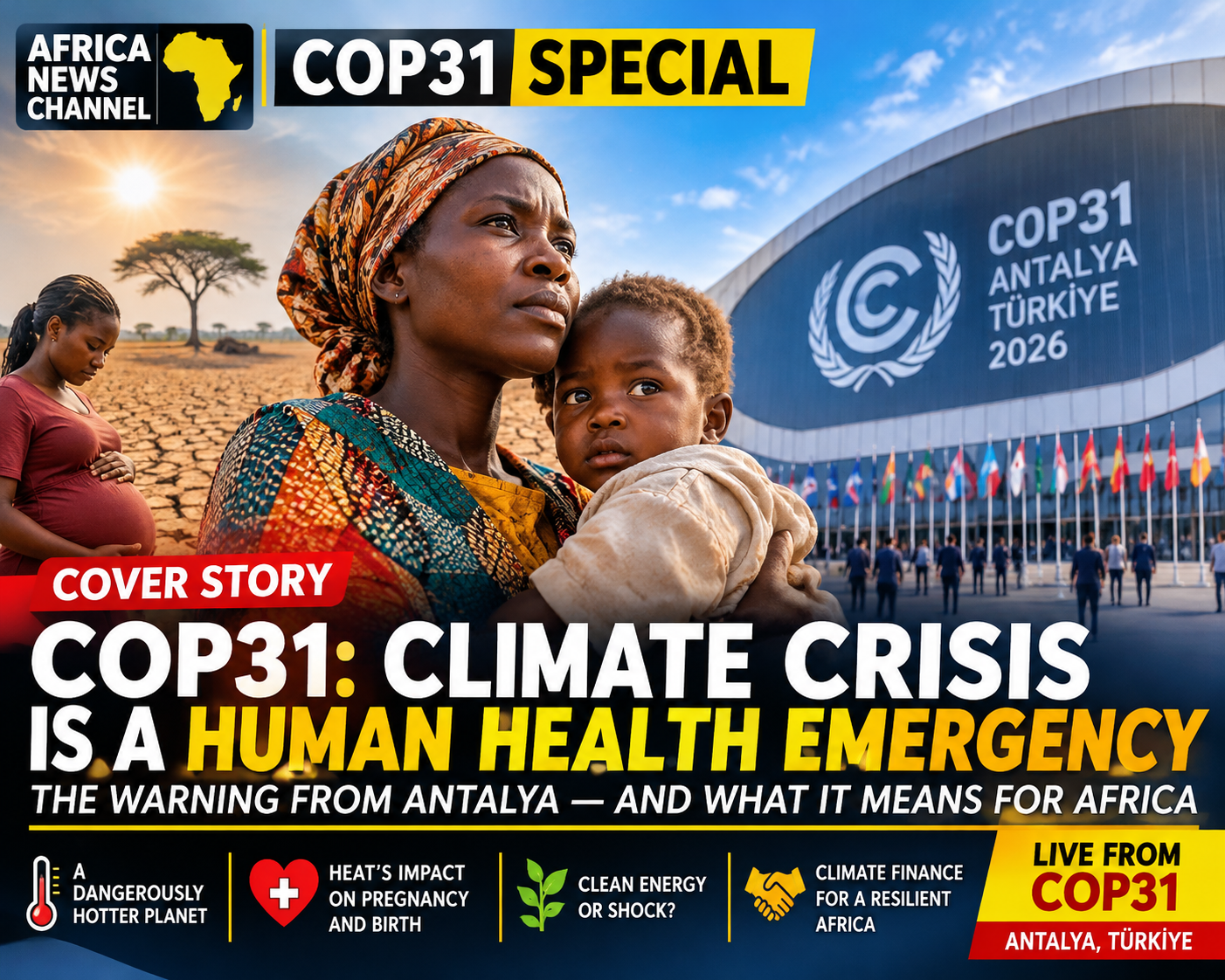
ANTALYA, TÜRKİYE | 9 NOVEMBER 2026 | SPECIAL OPENING-DAY ANALYSIS
By Ayele Addis Ambelu
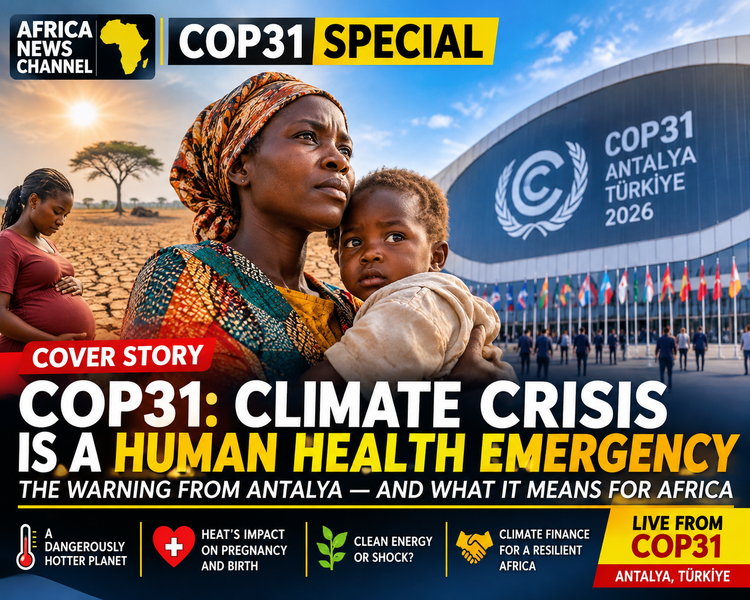
From record-breaking temperatures and a powerful El Niño to heat-related threats to pregnant women, newborns and vulnerable communities, COP31 has opened with an unmistakable warning: climate change is no longer just an environmental crisis. It is a growing global public-health emergency.
The opening day of the 31st United Nations Climate Change Conference (COP31) in Antalya, Türkiye, has placed human survival, health protection, food security and energy affordability at the centre of international climate diplomacy.
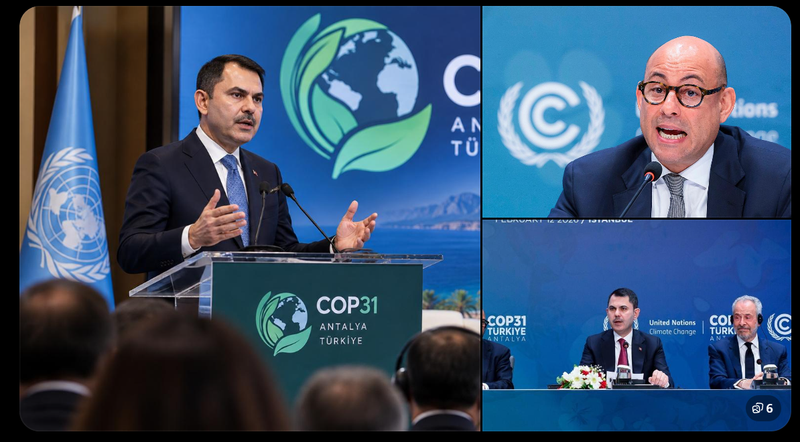
COP31 President Murat Kurum called on governments to turn climate promises into practical results, declaring the summit an “Implementation COP.” But the strongest warning came from UN Climate Change Executive Secretary Simon Stiell, who described the climate crisis as a health emergency of pandemic proportions.
“The climate crisis is now a global health crisis of pandemic proportions,” Stiell warned at a press conference hosted by the World Meteorological Organization (WMO) on 9 November.
His statement reflects an increasingly important shift in climate journalism: the consequences of global heating must be measured not only in degrees Celsius and carbon emissions, but also in lives lost, pregnancies endangered, diseases intensified, food systems disrupted and health systems overwhelmed.
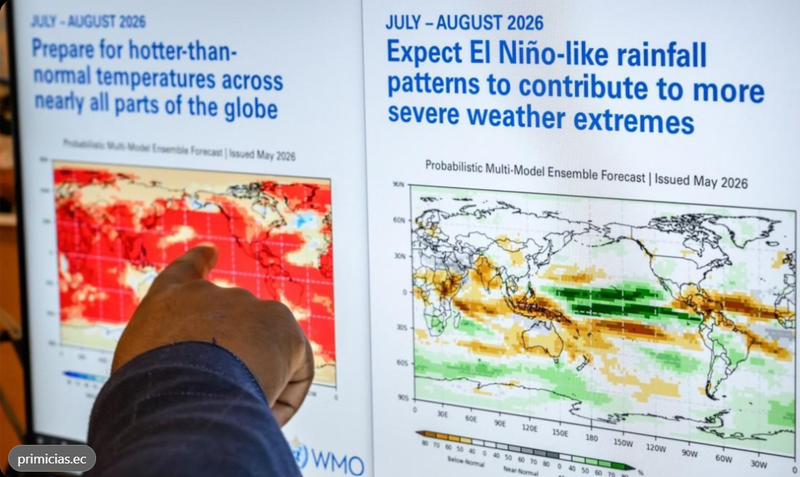
The scientific evidence presented at the summit makes the warning particularly urgent. WMO Secretary-General Celeste Saulo reported that the past 12 years have been the warmest on record, with the past four years occupying the top four positions. Global average temperature from January to September 2026 was approximately 1.47°C above the pre-industrial average.
The opening question for COP31 is therefore no longer whether climate change threatens human wellbeing. It is whether governments can deliver the resources and policies needed to protect people before the consequences become even more severe.
THE WORLD IS GETTING DANGEROUSLY HOT: WMO’S SCIENCE PUTS COP31 ON NOTICE
The WMO’s State of the Climate Update 2026, released on COP31’s opening day, delivers a serious assessment of the planet’s changing climate.
According to Celeste Saulo, the past 12 years have individually been the warmest on record, while the past four years—including 2026—are the four warmest.
The January–September global temperature average was approximately 1.47°C above the pre-industrial baseline. Saulo cautioned that the developing El Niño could push the annual average higher.
She also warned that the current 2026–2027 El Niño could have particularly strong effects, with sea-surface temperature anomalies in the tropical Pacific potentially approaching four times the 0.5°C threshold used by WMO to identify El Niño conditions.
Other findings highlighted in her opening remarks include:
- Ocean heat reached a record high for the tenth consecutive year.
- Sea-surface temperatures set monthly records during 2026.
- Global sea level reached a record high, increasing risks for approximately 900 million people living along low-lying coasts.
- Heatwaves, tropical cyclones and rainstorms are intensifying, with serious human and economic consequences.
Saulo also warned that 2027 could experience further temperature records because El Niño’s strongest influence on global temperatures often occurs in the year following its development.
A crucial distinction: The 1.47°C figure is the January–September 2026 average, not a declaration that the Paris Agreement’s long-term 1.5°C threshold has been permanently crossed. Short-term annual temperatures and long-term warming averages are different scientific measures.
Her most powerful warning was directed at the foundations of climate preparedness:
“We cannot afford to fly blind.”
Saulo argued that early-warning systems depend on sustained observations and reliable climate data. Without investment in weather stations, satellites, monitoring networks and scientific institutions, governments risk making decisions without adequate information.
This is especially important for African countries, where gaps in meteorological observations can undermine drought preparedness, flood forecasting, agricultural planning and public-health protection.
Source: WMO Secretary-General Celeste Saulo, COP31 press conference opening remarks, 9 November 2026, as supplied in the UNFCCC press material.
A HIDDEN CLIMATE DISASTER: EXTREME HEAT IS THREATENING PREGNANCY, NEWBORN SURVIVAL AND MATERNAL HEALTH
Perhaps the most important human-interest development emerging from COP31 is the growing scientific and political recognition of the risks extreme heat poses to pregnant women, unborn children and newborns.
Stiell specifically highlighted the consequences of rising temperatures for pregnancy and childbirth:
“The impacts of rising heat on pregnancy, newborns and maternal health are another unfolding health disaster which has the fingerprints of the climate crisis all over it.”
This warning is supported by a growing body of scientific research.
A 2020 systematic review and meta-analysis published in the BMJ, examining 70 studies across 27 countries, found that the odds of premature birth increased by approximately 5% for each 1°C rise in temperature. The research also identified associations between higher temperatures and stillbirth, with particularly significant concerns for women experiencing socioeconomic disadvantage.
A further systematic review published in 2024 examined 198 studies across 66 countries. It found that the odds of preterm birth increased by approximately 4% per 1°C increase in heat exposure, and by 26% during heatwaves. The authors cautioned that differences in study methods and exposure measurements limit the interpretation of these estimates.
What does the new Wellcome evidence reveal?
The COP31 press conference also highlighted a survey commissioned by Wellcome involving 1,000 healthcare professionals working in pregnancy, childbirth, postnatal and newborn care across Australia, Brazil, India, the United Kingdom and Zimbabwe.
Its findings are alarming:
98%
Had cared for a woman or baby whose health they believed had been affected by extreme heat.
81%
Were concerned about increasing risks to maternal, fetal and newborn health.
73%
Reported increased heat-linked complications over the previous five years.
92%
Wanted more training, guidance and resources to protect pregnant women.
Wellcome’s accompanying campaign materials also report associations of approximately 5% more premature births and 7% more gestational diabetes for each 1°C rise in temperature.
These are epidemiological estimates from the supporting research, not results directly measured by the 1,000-person healthcare-professional survey. They should not be presented as causal effects or as findings from that survey. wellcomeheatandpregnancypollresults.org+1
Why this matters for Africa
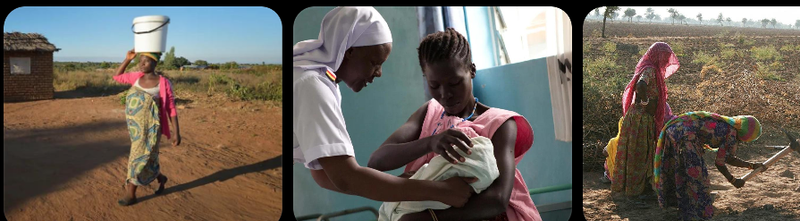
The implications are particularly serious for African women who work outdoors, depend on rain-fed agriculture, live in poorly ventilated housing or have limited access to electricity, clean water and maternal healthcare.
A pregnant woman working in a field during extreme heat cannot necessarily stop working. A mother travelling long distances to reach a health centre may have no access to cooling or reliable transport. A rural maternity facility without electricity or water may struggle to protect mothers and newborns during prolonged heat.
This makes maternal climate-health protection an issue of inequality, public investment and reproductive healthcare—not simply personal advice about avoiding the sun.
The World Health Organization, WMO, UNICEF and UNFPA launched a global framework on 21 October 2026 to help countries monitor the effects of extreme heat on pregnant women, newborns and children. It recommends integrating climate exposure data with routine maternal and child health indicators. The framework also reports that studies have found a 26% increase in the odds of preterm birth during heatwaves.
The policy challenge for COP31: Governments must integrate maternal and newborn health into national climate adaptation plans, heat-health action plans, early-warning systems and healthcare financing.
The issue deserves a permanent place in climate negotiations, rather than being treated as a supplementary health topic.
ELECTRIC OR SHOCK: THE COP31 PRESIDENT’S ENERGY TRANSITION CHALLENGE
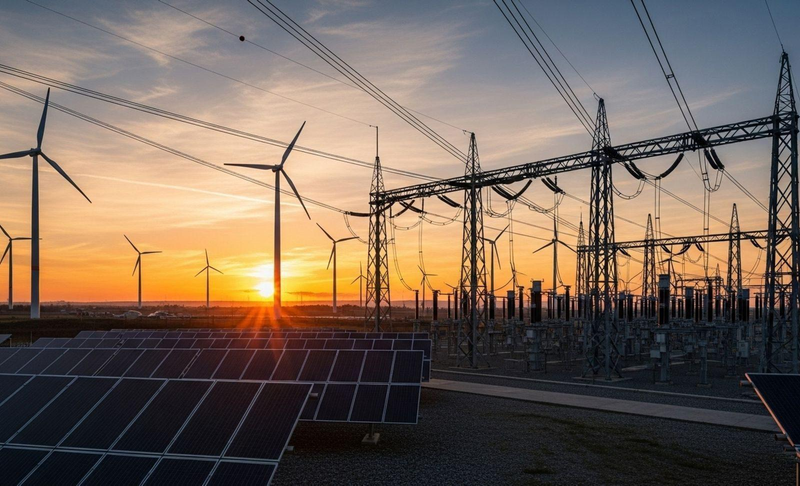
COP31 President Murat Kurum has placed electrification at the centre of the summit’s implementation agenda, presenting it as a response to climate pollution, household energy costs and global energy insecurity.
His message is direct:
“Now our promises must be backed by capital. That capital must fund investment. And that investment must deliver results.”
The Presidency’s proposed 35-by-35 Global Electrification Pledge seeks to increase electricity’s share of global final energy consumption to 35% by 2035.
The proposed transformation includes:
- Renewable electricity generation.
- Stronger transmission and distribution networks.
- Energy storage systems.
- Energy efficiency.
- Electrification of transport.
- Cleaner industrial production.
- More affordable household energy.
The objective is to reduce dependence on direct fossil-fuel consumption in buildings, transport and industry.
But electrification must not be confused with decarbonisation.
An economy can consume more electricity and still increase its emissions if the additional power is generated from coal, oil or gas.
This is where the credibility of the 35-by-35 pledge will be tested. It needs clear renewable-energy milestones, grid investment, affordable electricity and safeguards against locking developing countries into new fossil-fuel infrastructure.
President of COP31 Negotiations Chris Bowen reinforced the Presidency’s message:
“COP31 is an opportunity to show what cooperation can deliver at this crucial time for both our climate and global energy security.”
He also emphasised investment, infrastructure, jobs and resilient communities as measures of success.
Simon Stiell’s economic argument
Stiell connected the energy transition directly to household costs and the economic consequences of fossil-fuel dependence.
“At this COP, nations face a choice: electric or shock.”
He argued that clean energy and efficient electrification offer a way to reduce climate pollution and exposure to volatile fossil-fuel markets.
In his opening statement, he also cited an estimate that global renewables saved US$265 billion during the first half of 2026. This is a figure attributed to Stiell in the official COP31 opening remarks and should be reported with its underlying calculation and scope clarified before being used as an independently established global savings statistic.
The African perspective: Electrification could support industrial development, agricultural processing, irrigation, cold-chain systems, healthcare facilities and digital connectivity. But African countries require investment in generation, transmission, storage, regional interconnections and affordable access.
For Ethiopia, this debate connects directly to renewable electricity, hydropower, solar and wind development, electricity access, industrial parks and regional power trade.
The question is whether the global electrification agenda will create opportunities for African industrialisation or leave countries dependent on imported technology, external finance and expensive infrastructure.
CLIMATE FINANCE: THE IMPLEMENTATION TEST BEGINS WITH MONEY
The COP31 Presidency has repeatedly emphasised that ambitious climate targets cannot be implemented without adequate financial resources.
Kurum referred to the climate-finance agreement reached in Baku, which calls for at least US$300 billion annually for developing countries by 2035, alongside the wider ambition to scale climate finance from all sources to at least US$1.3 trillion annually.
However, the distinction between these two figures is essential.
- US$300 billion annually by 2035: the agreed climate-finance goal for developing countries under the Baku outcome.
- US$1.3 trillion annually by 2035: the wider mobilisation ambition involving all sources of climate finance.
Neither figure represents money already delivered.
Stiell also highlighted the Climate & Health Funders Coalition, which was launched at COP30 in Belém.
Wellcome Director of Climate and Health Alan Dangour announced that the coalition had awarded more than US$225 million during its first year, while attracting another US$150 million in additional commitments from existing and new funders.
The coalition’s work covers extreme heat, air pollution, climate-sensitive infectious diseases and health data systems.
This is a significant development, but the announcement raises important questions about the distribution of resources, the countries benefiting, the grants awarded and the measurable health outcomes achieved.
Dangour offered an important perspective on how climate success should be evaluated:
“Measuring success not through emissions targets or degrees Celsius but by lives saved and health outcomes improved.”
This is a powerful challenge to conventional climate reporting. Emissions reductions matter, but they must ultimately protect people.
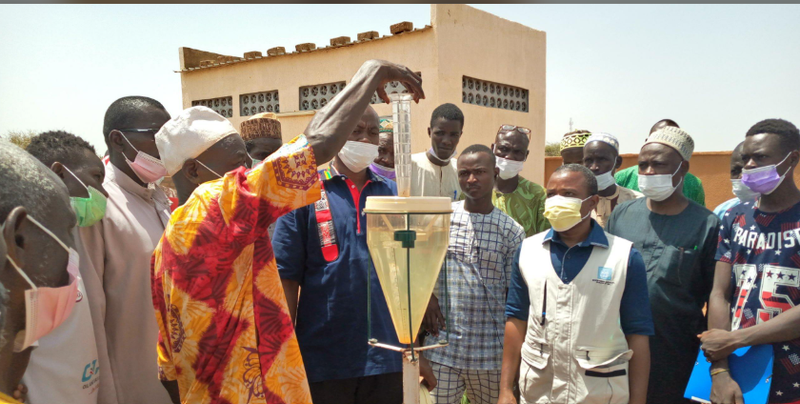
AFRICA’S EARLY-WARNING GAP: THE CONTINENT CANNOT AFFORD TO FLY BLIND
One of the most important statements from the WMO press conference concerned the need for sustained investment in climate observations and early-warning systems.
Saulo reported that the number of countries reporting multi-hazard early-warning systems increased from 56 in 2015 to 136 in 2025.
However, another WMO publication the Global Status of Multi-Hazard Early Warning Systems 2025 reports that 119 countries had such systems in place in 2025.
Journalists should not treat these figures as directly interchangeable, since the statements use different reporting measures or coverage definitions. The underlying datasets and methodology need clarification before journalists publish a single definitive global total.
For Africa, the challenges remain substantial.
Early-warning systems do not cover approximately 60% of Africa’s population, according to the WMO. Its September 2026 Addis Ababa Call to Action also highlighted uneven progress, gaps in observing infrastructure, weak last-mile warning delivery and insufficient sustainable financing. World Meteorological Organization+1
For East Africa, these weaknesses have practical consequences:
- Farmers may not receive timely drought forecasts before planting.
- Pastoral communities may not receive actionable information before severe water shortages.
- Flood-prone communities may lack adequate evacuation warnings.
- Health authorities may not receive sufficiently early information about heat-related health risks.
- Local governments may lack the data needed to prepare emergency services.
Ethiopia: a direct connection between climate science and public health
Ethiopia offers an important national reporting angle.
The WHO Health Cluster identifies drought vulnerability, changing weather conditions, malnutrition, waterborne diseases and population displacement as important pressures on the country’s health response.
Ethiopia also has a Health National Adaptation Plan II (2024–2028), which provides a policy framework for strengthening climate-resilient healthcare, surveillance, early-warning systems and coordination between health and climate institutions. UNEP Law and Environment Assistance Platform
The Ethiopian Meteorological Institute’s climate-health bulletins provide another example of the practical connection between meteorological information and health protection. Its July 2026 bulletin identified heat-stress risks in lowland areas including Afar, Gambella, Somali, South Ethiopia and Western Amhara.
These examples provide a strong basis for an Ethiopia-focused COP31 investigation:
Are climate forecasts reaching health centres, farmers, pastoralists and pregnant women in time to prevent harm?
Saulo’s warning is therefore particularly relevant to Africa:
“We cannot afford to fly blind.”
The continent needs more than weather predictions. It needs a reliable chain connecting scientific observations, forecasts, government decisions, public communication and local action.
THE POLITICAL MESSAGE: AN IMPLEMENTATION COP OR ANOTHER SUMMIT OF PROMISES?
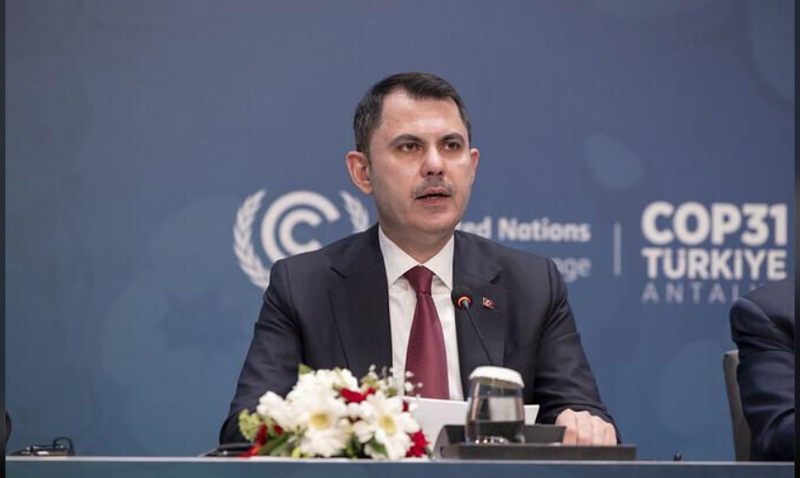
In his opening address, President Murat Kurum attempted to frame COP31 as a summit capable of bridging geopolitical divisions and accelerating practical climate action.
He warned that climate change cannot be separated from economic instability, conflict, food insecurity, debt, technological change and unequal access to finance.
One of his most striking observations was:
“A drought in one part of the world is felt at the dinner table in another.”
This statement captures the increasingly interconnected nature of global food systems and climate impacts.
Kurum also described Türkiye’s ambition to serve as a bridge between countries facing different political and economic circumstances:
“Türkiye has long served as a bridge – we are ready to take on that responsibility again.”
The Presidency’s central commitment is to make climate negotiations relevant to people’s everyday lives, including through resilient infrastructure, productive farmland, cleaner industries, affordable household energy and employment.
However, the credibility of this vision will depend on whether governments can resolve difficult questions about fossil fuels, finance, adaptation and responsibility.
The summit is jointly structured with Türkiye hosting and leading the Presidency’s Action Agenda, while Australia’s Chris Bowen serves as President of Negotiations.
This division creates an opportunity to connect political commitments and practical climate initiatives with formal negotiating outcomes. It also creates a responsibility to ensure that the Action Agenda does not substitute voluntary announcements for decisions requiring international agreement.
COP31 has opened with a message that should reshape the way the global climate crisis is reported.
The warming of the planet is no longer a distant environmental prediction. It is increasingly experienced through heat-related illness, disrupted pregnancies, food insecurity, water shortages, damaged infrastructure, displacement and economic instability.
The evidence presented by WMO, the warnings from UN Climate Change and the maternal-health research highlighted by Wellcome all point towards the same conclusion: climate change is becoming a direct threat to human health and social wellbeing.
For Africa, the consequences are particularly important. Communities that have contributed relatively little to historical global emissions frequently face severe climate risks while having fewer financial and technological resources to respond.
Ethiopia and East Africa must therefore be central to the discussion about adaptation finance, early-warning systems, climate-resilient agriculture and accessible healthcare.
But the most important question extends beyond Africa.
Will the international community continue to measure climate progress through declarations, pledges and conference outcomes, or will it finally measure progress through the people whose lives are being affected?
COP31 President Murat Kurum has promised an “Implementation COP.” Simon Stiell has challenged countries to choose between electrification and continued fossil-fuel shocks. Celeste Saulo has warned that the world cannot afford to fly blind.
Now the world must demonstrate that these words can become action.
A climate summit succeeds not when leaders promise to save the planet, but when their decisions help save the people living on it.
This story was produced as part of the COP31 Climate Change Media Partnership, a journalism fellowship organized by Internews’ Earth Journalism Network, Informed Earth and the Stanley Center for Peace and Security.
This story was produced as part of the COP31 Climate Change Media Partnership, a fellowship for journalists covering the UN climate talks.








