





By Ayele Addis Ambelu (ANC)
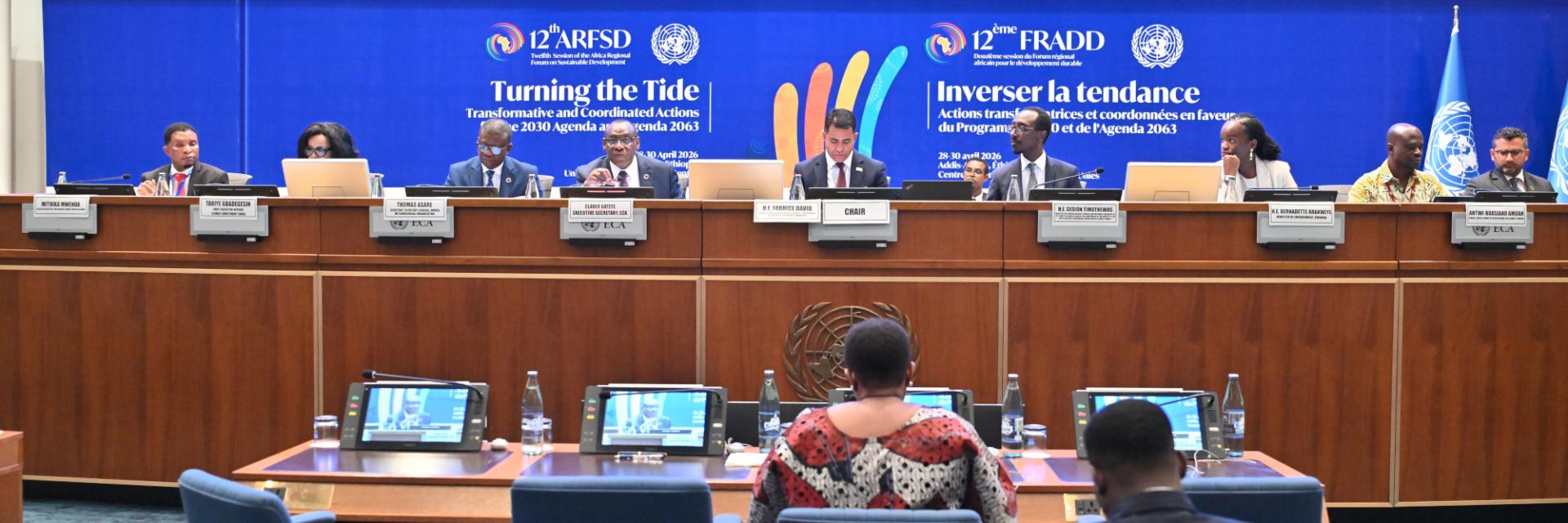
Addis Ababa, Ethiopia – Africa’s development ambitions are not being held back by lack of vision, but by the scale, cost and structure of financing available to deliver them, speakers said during two high-level panels at the twelfth Africa Regional Forum on Sustainable Development (ARFSD12).
The discussions, held under the themes of scaling up transformative and coordinated action for the 2030 Agenda and Agenda 2063, and unlocking finance for climate resilience and sustainable development in Africa, brought together ministers, continental institutions, development finance leaders, climate negotiators, civil society and international organizations.
A central message echoed among the panelists: Africa’s challenge is not ambition, but delivery. Delivery, speakers stressed, requires affordable finance, stronger domestic systems, bankable project pipelines, credible data and a reformed global financial architecture that responds to Africa’s realities.
Claver Gatete, who moderated the two sessions, said Africa must protect climate and development investments even under severe fiscal pressure. He emphasized that reducing risk, whether currency risk, climate risk or policy risk, is central to mobilizing both domestic and private capital.
Speakers noted that Africa continues to face a disproportionately high cost of capital, driven in part by weaknesses in the international financial architecture. Credit rating methodologies, risk-weighting practices and capital adequacy frameworks were cited as factors that constrain investment in climate resilience, infrastructure and sustainable development.
Timothewos, Ethiopia’s Minister of Foreign Affairs and President-Designate for COP32, set the strategic context by grounding the discussion in both African responsibility and global leadership:
“Africa’s experience with sustainable development continues to highlight a central challenge – persistent structural barriers, large financing gaps, rising debt burdens declining investment and high cost of capital are eroding hard-won development gains.”
“The COP32 Presidency of Ethiopia will consistently frame climate action as an integral part of sustainable development and poverty eradication. Implementation will be at the core of our presidency…”
Global Reality Check: Experts Warn of a “Financing Emergency”
International research reinforces the urgency raised at ARFSD12. According to the United Nations, developing countries face an annual financing gap exceeding $4 trillion to meet the Sustainable Development Goals. Meanwhile, the International Monetary Fund has warned that rising debt burdens across African economies are limiting their ability to invest in climate resilience.
Climate scientists linked to the Intergovernmental Panel on Climate Change caution that Africa is among the most vulnerable regions to climate shocks despite contributing the least to global emissions—intensifying calls for fairness in global finance.
Climate Finance Imbalance Sparks Criticism
Panelists said climate finance flows remain imbalanced, unpredictable and heavily tilted toward mitigation, while grant-based resources for adaptation, loss and damage, and disaster risk reduction remain insufficient.
Antwi-Boasiako Amoah stressed the need for fair, predictable and accessible finance:
“Less pledges… more predictable, accessible grant-based and concessional financing.”
Civil society voices echoed this concern. Mithika Mwenda of the Pan-African Climate Justice Alliance stated:
“We must reclaim the Common, but Differentiated Responsibilities… Those who contributed most to the crisis… must do the most.”
Innovative Finance: From Theory to Scale
Experts highlighted that Africa is not short of solutions but scaling them remains the challenge.
Tariye Gbadegesin pointed to growing evidence that resilience investments, protecting food systems, water supplies and infrastructure, deliver strong economic returns.
Thomas Asare emphasized the role of climate data:
integrating risk data into instruments such as resilience bonds and debt-for-climate swaps could unlock private capital at scale.
Meanwhile, blended finance models presented by Aakif Merchant are gaining traction globally, with institutions like the World Bank increasingly promoting such tools to de-risk investments in emerging markets.
Africa’s Structural Challenge: Debt, Data, and Delivery
In the second panel, Mthuli Ncube underscored the fiscal reality:
rising debt service pressures and constrained fiscal space are limiting long-term investment capacity.
Research from the African Development Bank shows that Africa’s infrastructure financing needs alone exceed $100 billion annually, while weak domestic resource mobilization continues to undermine progress.
Jean-Bertrand Azapmo called for linking climate finance with industrialization under the African Union framework and the African Continental Free Trade Area.
A System Under Fire: Calls for Global Reform Intensify
Speakers and global analysts alike pointed to systemic inequities in the international financial system. Credit rating biases and high borrowing costs mean African countries often pay up to five times more for capital than developed nations.
N’Sonde Regis noted:
more support is needed to unlock finance without worsening debt vulnerabilities.
International think tanks, including those aligned with the Organisation for Economic Co-operation and Development, have similarly argued that without reforms, global finance will continue to underserve climate-vulnerable regions.
From Fragmentation to Transformation
Across both panels, a clear warning emerged: fragmented, project-based approaches are failing.
Instead, experts called for:
- Integrated national financing strategies
- Investment-ready project pipelines
- Stronger institutions and transparency systems
- Scaled use of green bonds, carbon markets, and blended finance
Olapeju Ibekwe emphasized the role of non-state actors in ensuring accountability and impact.
The Bottom Line: Africa Ready, But the World Must Deliver
The Forum underscored that Africa is prepared to lead through reform, innovation and accountability. But without a global financial system that matches this ambition, progress risks stalling.
As pressure builds ahead of COP32, the message from Addis Ababa is unmistakable:
Africa is no longer asking for promises, it is demanding a financial system that delivers.
ARFSD12 #ClimateFinance #AfricaRising #SustainableDevelopment #SDGs #Agenda2063 #ClimateAction #GlobalFinance #COP32 #ClimateJustice #GreenGrowth #DevelopmentFinance #AfricaEconomy #Resilience #UN #AfCFTA








