How Mechanical Failure, Weak Vehicle Inspections and Human Error Continue to Turn Ethiopia’s Roads into Death Traps
By Ayele Addis Ambelu
Addis Ababa
The passengers had little reason to doubt the bus.
It carried a valid registration plate. An inspection sticker was displayed on the windshield. Like thousands of Ethiopians who rely on public transport every day, they assumed the vehicle had been inspected and declared roadworthy.
But before reaching its destination, the journey ended in tragedy.
According to the Central Ethiopia Regional Police Commission, a public minibus travelling from Zebidar toward Addis Ababa overturned after reportedly suffering a technical failure while descending the steep Ashgabat escarpment in Meskan Woreda, East Gurage Zone. Eleven people, including two children, were killed and six others sustained injuries.
Inspector Tamrat Desalegn, Head of the Traffic Accident Information and Statistics Division of the Central Ethiopia Regional Police Commission, told Africa News Channel that preliminary investigations indicated the vehicle had developed a technical problem while descending the mountain. Passengers and local residents reported that the driver and assistant stopped to repair the vehicle before continuing the journey. Moments later, the vehicle reportedly accelerated uncontrollably and plunged into a ravine.
The crash has renewed difficult questions about the safety of Ethiopia’s commercial vehicle fleet and the effectiveness of technical inspection systems designed to prevent unsafe vehicles from operating on public roads.
A Crisis Measured in Lives
Road traffic crashes have become one of Ethiopia’s most persistent public safety emergencies.
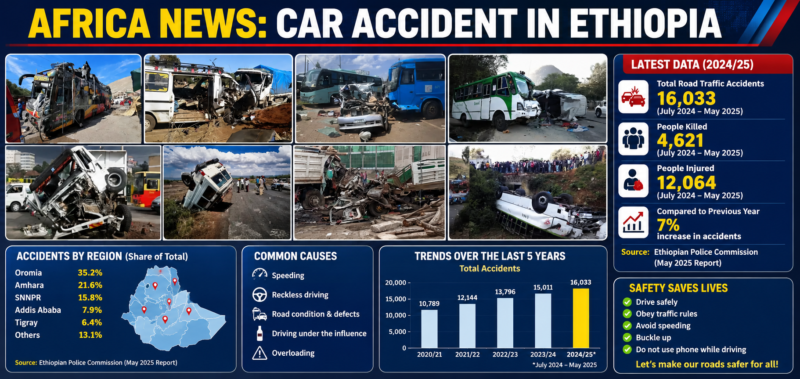
A road safety assessment presented during a national forum organized by the Ministry of Transport and the United Nations at the United Nations Economic Commission for Africa in Addis Ababa found that approximately 4,732 people were expected to lose their lives to road crashes during the assessment period, an average of 13 deaths every day, or one person every two hours.
The study, prepared by road safety researcher Dr. Getu Segene, found that approximately 85 percent of reported crashes occur in Oromia, Amhara, the Southern Regions and Addis Ababa. It also concluded that 52 percent of crash victims are passengers, 33 percent are pedestrians, while around 60 percent of victims are between 18 and 52 years old, the country’s most economically productive age group.
Although only about 14 percent of Ethiopia’s road network is paved, the assessment found that nearly 79 percent of reported crashes occur on asphalt roads, suggesting that driver behaviour, vehicle condition and traffic management remain critical factors beyond road surface alone.
Presenting the findings, Dr. Getu Segene argued that road safety challenges extend beyond driver behaviour.
“Traffic accidents are caused by infrastructure that is not designed for mass public transport and non-motorized road users, weak vehicle technical inspections, the increasing number of ageing public transport vehicles, gaps in driver licensing, and weaknesses in regulatory enforcement,” he said during the national road safety discussion.
His findings echo concerns repeatedly raised by transport engineers, traffic police and public health researchers who argue that road safety is not simply a transport issue but a national development challenge.
The Human Cost Behind the Numbers
Every crash tells a personal story.
Parents never return home. Children lose caregivers. Survivors face permanent disabilities, mounting medical bills and years of rehabilitation.
According to the World Health Organization (WHO), road traffic injuries kill approximately 1.19 million people globally each year and remain the leading cause of death among young people aged 5–29 years.
Low- and middle-income countries account for the overwhelming majority of these deaths despite having fewer vehicles than wealthier nations.
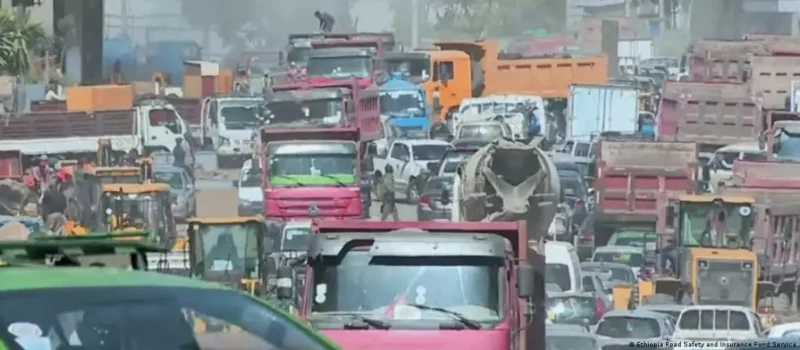
For Ethiopia, where the registered vehicle fleet is estimated at more than 1.6 million vehicles, the burden is particularly severe.
Why Do So Many Crashes Happen?
Government studies suggest that human behaviour remains the leading cause.
Mohamed Hassan, Deputy Chief Executive Officer of the Ethiopian Road Safety and Insurance Fund Service, said government research indicates that 68 percent of road crashes are directly linked to driver behaviour, while about 14 percent result from vehicle technical defects.
“These two factors alone account for about 82 percent of the major causes of road traffic accidents,” Mohamed Hassan said. “The remaining causes include weather conditions, road factors and other circumstances.”
He said the Road Safety and Insurance Fund Service is expanding driver training, competency assessments and public awareness campaigns in cooperation with regional authorities and other stakeholders.
Officials say reminders are being provided to pedestrians in busy market areas, while transport authorities are strengthening driver licensing and education programmes.
Beyond Driver Error
Yet experts caution that blaming drivers alone oversimplifies a much larger problem.
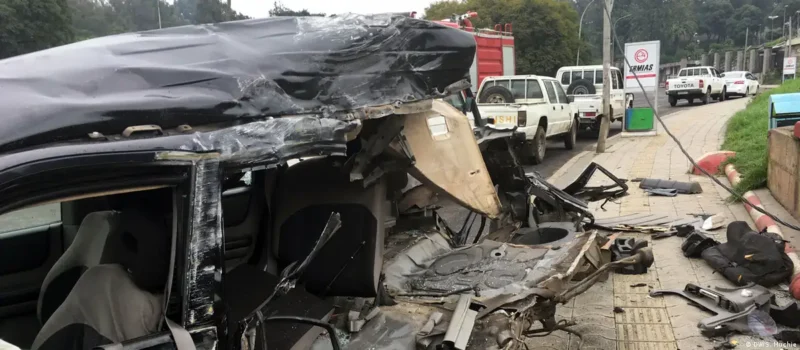
Mechanical failures, including defective brakes, worn tyres, steering failures and poor maintenance—continue to appear in investigations into fatal crashes.
The recent Central Ethiopia bus disaster illustrates that concern. Preliminary police information suggests the vehicle experienced a technical problem before the crash, raising broader questions about whether the inspection system is consistently identifying dangerous defects before vehicles return to the road.
If vehicles displaying valid inspection certificates continue to suffer catastrophic mechanical failures, investigators say attention must also focus on maintenance standards, inspection quality and regulatory oversight.
A National Challenge
Deputy Commissioner General Melaku Fanta, Commander of the Ethiopian Federal Police Crime Prevention Directorate, recently told traffic police officers during a capacity-building programme that improving enforcement requires more than issuing penalties.
He emphasized the need to combat impaired driving, illegal licensing practices, weak vehicle inspection procedures and failure to obey road signs, while encouraging officers to combine law enforcement with public education.
“We must not only enforce the law but also educate road users and protect the lives of citizens,” he said during the training programme.
His message reflects a growing consensus among policymakers that Ethiopia’s road safety crisis demands coordinated action involving police, transport authorities, engineers, health professionals and the public.
The Investigation Continues
This investigation examines whether Ethiopia’s vehicle inspection system is adequately protecting passengers, why mechanical failures continue to appear in deadly crashes, and what reforms experts believe are urgently needed to prevent more families from losing loved ones on the nation’s roads.
This is Part I of the investigation. The next section will examine Ethiopia’s vehicle inspection system, maintenance failures, oversight challenges, and the evidence surrounding roadworthiness certification, drawing on the official material and research you have collected.