By Zelalem Birhanie, (abechu2015@gmail.com)
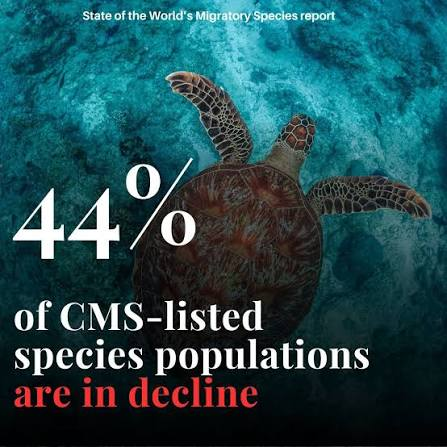
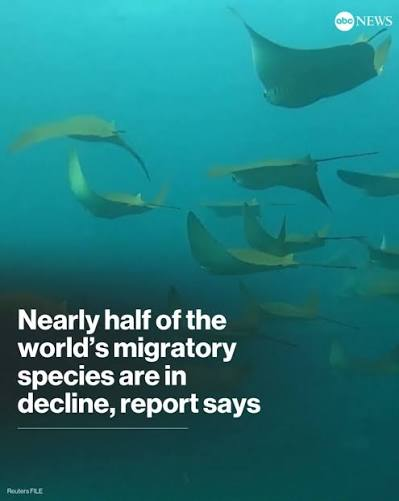
Bonn / Campo Grande — Nearly half of the world’s migratory wild animal species protected under an international United Nations treaty are now experiencing declining populations, according to a new report that warns governments that conservation efforts are failing to keep pace with mounting threats.
The interim update to the landmark State of the World’s Migratory Species report found that 49 percent of monitored migratory species populations are declining, up from 44 percent only two years ago. At the same time, 24 percent of the species covered face extinction, representing a further increase in global conservation risk.
The findings will be presented to governments and conservation leaders at the 15th Meeting of the Conference of the Parties to the Convention on the Conservation of Migratory Species of Wild Animals, known as CMS COP15, scheduled to take place in Campo Grande, Brazil, from March 23 to 29, 2026.
The meeting comes at a critical moment for global wildlife conservation. Governments will consider a wide-ranging agenda aimed at responding to threats facing animals whose survival depends on the protection of habitats and migration routes that often stretch across several countries and continents.
The report warns that, despite international treaty protections and some successful conservation efforts, the overall direction of key indicators remains negative. Twenty-six CMS-listed species, including 18 migratory shorebird species, have moved into higher categories of extinction risk. Only seven CMS-listed species have improved, including the saiga antelope, scimitar-horned oryx and Mediterranean monk seal.
The update also identifies 9,372 Key Biodiversity Areas important for CMS-listed species, but says that 47 percent of the area covered by these important sites is not protected or conserved.
The findings highlight the scale of the challenge facing countries responsible for protecting migratory animals. Billions of aquatic, terrestrial and avian animals move every year across rivers, oceans, land and skies. Their ecological role extends far beyond their own survival. Migratory species pollinate plants, transport nutrients, regulate ecosystems, control pests, store carbon and support livelihoods and cultures around the world.
Yet their survival requires cooperation far beyond the borders of any single country.
“Some species are responding to concerted conservation action, but too many continue to face mounting pressures across their migratory routes,” CMS Executive Secretary Amy Fraenkel said, calling for coordinated and effective international action.
The report identifies overexploitation and habitat loss and fragmentation as the two greatest threats facing migratory species worldwide. Other pressures include illegal and unsustainable taking of wildlife, bycatch, pollution, vessel strikes, infrastructure development, renewable energy impacts, climate change and the degradation of ecological corridors.
The new update was developed for CMS by the UN Environment Programme World Conservation Monitoring Centre, together with other contributors. It examines significant changes in the conservation status of migratory species since the publication of the first global assessment in 2024, using the latest available data from the IUCN Red List of Threatened Species, scientific literature and new information on population trends and critical habitats.
While the findings are alarming, the report also points to important progress.
New initiatives are improving the mapping of migratory routes and helping governments identify the places and corridors that require protection. These include the Global Initiative on Ungulate Migration, the Migratory Connectivity in the Ocean system and work by BirdLife International to identify and map major marine flyways.
Progress has also been made in identifying important habitats for sharks, rays and marine mammals, while new initiatives are expected to improve knowledge of areas used by marine turtles.
The report says such advances demonstrate that conservation action can work when countries cooperate and scientific knowledge is translated into effective policy.
The urgency is particularly high for species listed under CMS Appendix I, which includes animals considered to be in danger of extinction throughout all or a significant part of their range.
There are currently 188 Appendix I species, including 28 terrestrial mammals, 23 aquatic mammals, 103 birds, eight reptiles and 26 fish. Countries within the range of these species are required to provide strict protection, including preventing hunting or capturing, protecting and restoring important habitats and addressing obstacles that disrupt migration.
One of the initiatives expected to receive attention at COP15 is the proposed Global Initiative on Taking of Migratory Species. The CMS-led initiative is designed to support governments, experts and local communities in ensuring that any taking of migratory wildlife is legal, sustainable and safe.
The initiative responds to evidence suggesting that the pressure created by taking migratory animals for domestic use may be significantly greater than the pressure caused by international trade.
Fraenkel said governments should act before species reach a point of irreversible decline.
“By strengthening governance, monitoring, legislation and community engagement upstream, we can reduce pressure on these remarkable animals and put them on the path to lasting recovery,” she said.
The new assessment builds on the first State of the World’s Migratory Species report, published in 2024. That landmark study provided the first comprehensive global assessment of migratory animals and examined 1,189 species listed under CMS Appendices I and II, with analysis connected to more than 3,000 additional migratory species.
The 2024 report found that 70 CMS-listed species had become more endangered over the previous three decades, compared with only 14 that had improved in conservation status. It also reported an average decline of 90 percent in migratory fish populations since the 1970s and found that 97 percent of CMS-listed migratory fish species faced extinction.
More than half of the Key Biodiversity Areas considered important for CMS-listed species lacked protected status, the earlier report found.
The latest interim update provides governments with a more current scientific picture before the COP15 negotiations and is expected to help identify priority areas for action before the next full global report, scheduled for presentation at COP16 in 2029.
COP15 itself is expected to address nearly 100 agenda items covering some of the most pressing conservation challenges facing migratory wildlife. Discussions will include the impacts of deep-sea mining, illegal and unsustainable taking, bycatch, habitat fragmentation, marine pollution, vessel strikes, climate change, declining insect populations and the protection of ecological connectivity and migratory corridors.
Among the other scientific reports expected to be presented at the meeting is an assessment of the potential impacts of deep-sea mining on migratory species.
The study warns that mining activities at depths between 1,000 and 6,000 metres could affect marine wildlife through sediment plumes, wastewater, metal contamination, persistent noise and habitat destruction. These pressures could disrupt animal navigation, feeding and prey availability while also increasing the risk of ship strikes.
According to the assessment, almost half of the marine mammal species covered by the Convention could be affected, along with sharks, rays, marine reptiles, seabirds and bony fish.
Another report, the Global Assessment of Migratory Freshwater Fishes, focuses on the major migrations taking place in the world’s rivers. It warns that freshwater migratory species face serious threats from overuse, river fragmentation and pollution and identifies 325 new candidate species that could potentially benefit from inclusion in the CMS Appendices.
CMS is a legally binding United Nations treaty and one of the world’s major international frameworks for the conservation of migratory wildlife. Its work is based on international cooperation among countries where migratory species occur, recognising that no single government can protect animals whose lives and habitats extend across national borders.
The treaty has 132 Parties, including the European Union. The Conference of the Parties meets every three years to review conservation progress, consider the inclusion of additional species under the treaty and strengthen international action against emerging and continuing threats.
At COP15, governments, scientists, conservation organisations, Indigenous peoples, local communities and civil society representatives will gather to determine how the latest scientific evidence should be translated into stronger protection for the world’s migratory animals.
For conservation leaders, the central message of the new report is clear: scientific knowledge and conservation tools are improving, but the decline of migratory wildlife is continuing.
The challenge now, Fraenkel said, is whether governments will provide the political commitment and investment needed to reverse the trend.
The future of migratory species, many of which travel thousands of kilometres across borders and continents, may depend on the answer.