





By Ayele Addis Ambelu, Special Report | April 13, 2026
What it takes to eat: New report reveals how war is cutting off access to food as hunger deepens in Sudan
Khartoum, Sudan, 13 April 2026 – In war-torn Sudan, food is no longer simply scarce; it is hunted, smuggled, negotiated, and often paid for with blood. A new report reveals a chilling reality: for millions, survival depends on crossing active frontlines just to secure a single meal. What should be a basic human necessity has become one of the most dangerous journeys in the country.
Across conflict zones such as North Darfur and South Kordofan, families are living on the edge of famine, surviving on “one meal a day or less,” with many forced to skip entire days without food. In the most desperate circumstances, people are eating leaves, grass, and even animal feed, substances never meant for human consumption.
“We no longer ask what we will eat. We ask who will eat.” Internally displaced woman, North Darfur
A new report launched today by Action Against Hunger (ACF), CARE International, International Rescue Committee (IRC), Mercy Corps, and Norwegian Refugee Council (NRC), shows how the war in Sudan is driving communities into famine conditions, with families surviving on meals made possible only because people risk their lives crossing active battlefields to produce, trade and access food.
The report documents how three years of war and violations of International Humanitarian Law have turned the journey of food–from farms to markets to homes– into a dangerous and often deadly process. Despite these conditions, Sudanese communities continue to sustain a fragile food system through extraordinary resilience and ingenuity.
The report finds that millions of people in heavily conflict-affected areas, including parts of North Darfur and South Kordofan, are surviving on just one meal a day or less. Families are forced to skip meals entirely, reduce portions, and in some cases resort to eating leaves and animal feed, food not normally considered edible, as conflict, displacement and market disruptions continue to drive hunger to extreme levels. Communal kitchens, once a lifeline for many, are increasingly unable to meet rising needs as funding and food supplies dwindle.
“We no longer ask what we will eat. We ask who will eat.” — Ikhlas [Name has been changed]
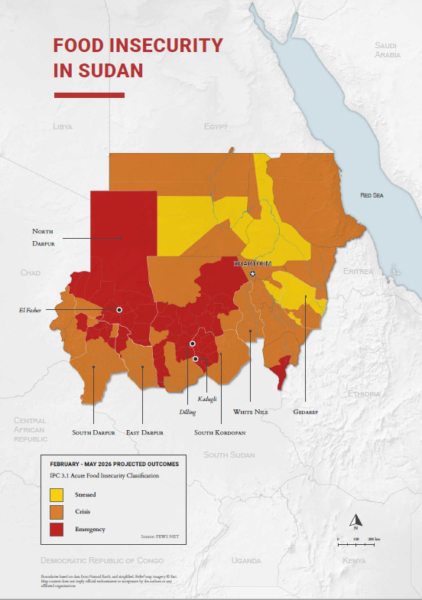
The Integrated Food Security Phase Classification (IPC) has already confirmed famine in parts of Sudan, with the risk of famine spreading to additional areas. More than half of Sudan’s population,28.9 million people, is now acutely food insecure, including over 10 million facing severe or extreme levels of hunger. The crisis is being further intensified by economic collapse and climate shocks.
The situation has been compounded by widespread violations of international humanitarian law, including the use of starvation as a weapon of war and targeted attacks on civilians and civilian infrastructure. The relentless violence, displacement and siege tactics have systematically dismantled Sudan’s food system. Farms have been destroyed, farmers killed, and markets disrupted by attacks, closures and exploitative taxation.
Women and girls have been disproportionately affected, facing heightened risks of sexual and gender-based violence that restrict their ability to access food and essential services, further increasing their vulnerability to hunger.
Despite these immense challenges, local food systems continue to function under extreme pressures. Farmers, traders, and local community networks continue to produce and move food despite insecurity and repeated disruptions. Local community-led responses, including women’s groups, mutual aid groups, traders and community committees, are helping families survive, but these efforts are increasingly strained and cannot meet the scale of needs.
The report is based on extensive research, including 80 key informant interviews and 40 focus group discussions with displaced farmers, traders, community members and humanitarian actors across North Darfur, South Kordofan, White Nile and Gedaref.
The five humanitarian organisations behind the report call on all parties to the conflict to immediately cease actions that drive hunger and violate international humanitarian law, including restricting humanitarian access and targeting civilians. Urgent action is needed to protect Sudan’s food system, ensure safe movement of people and goods, and support local markets and food production.
Without immediate and sustained intervention, Sudan’s food crisis will continue to deepen across conflict-affected areas, with devastating consequences for millions of people.
Facts / Background
- The report is based on extensive research, including 80 key informant interviews and 40 focus group discussions with displaced farmers, traders, community members and humanitarian actors across North Darfur, South Kordofan, White Nile and Gedaref and 80 key informant interviews.
- The United Nations (UN) Independent International Fact-Finding Mission has documented a “war of atrocities” against civilians, including the use of starvation and sexual violence as weapons of war, with direct and large-scale attacks on civilians and civilian infrastructures.
- Female-headed households are reported to be three times more likely to experience food insecurity than male-headed households, with fewer than 2 per cent considered to be food-secure.
- In 2025, food security interventions under the Sudan Humanitarian Needs and Response Plan (HNRP) received less than half of their requested funding – and early recovery received only 1 per cent. In fact, the overall response was only 40 per cent funded by the end of 2025.
- With resources dwindling, community kitchens across the country are closing or reducing meal provision by 50 per cent or more – for example, only providing one meal a day, rather than three. Funding cuts are reported to have forced a large share of ERR-supported services to shut down, including in areas facing famine-like conditions.
A Food System Under Fire
The report paints a stark picture of a country where the entire food system from farm to table has been systematically dismantled by nearly three years of brutal conflict. What once sustained millions is now fractured by violence, displacement, and deliberate obstruction.
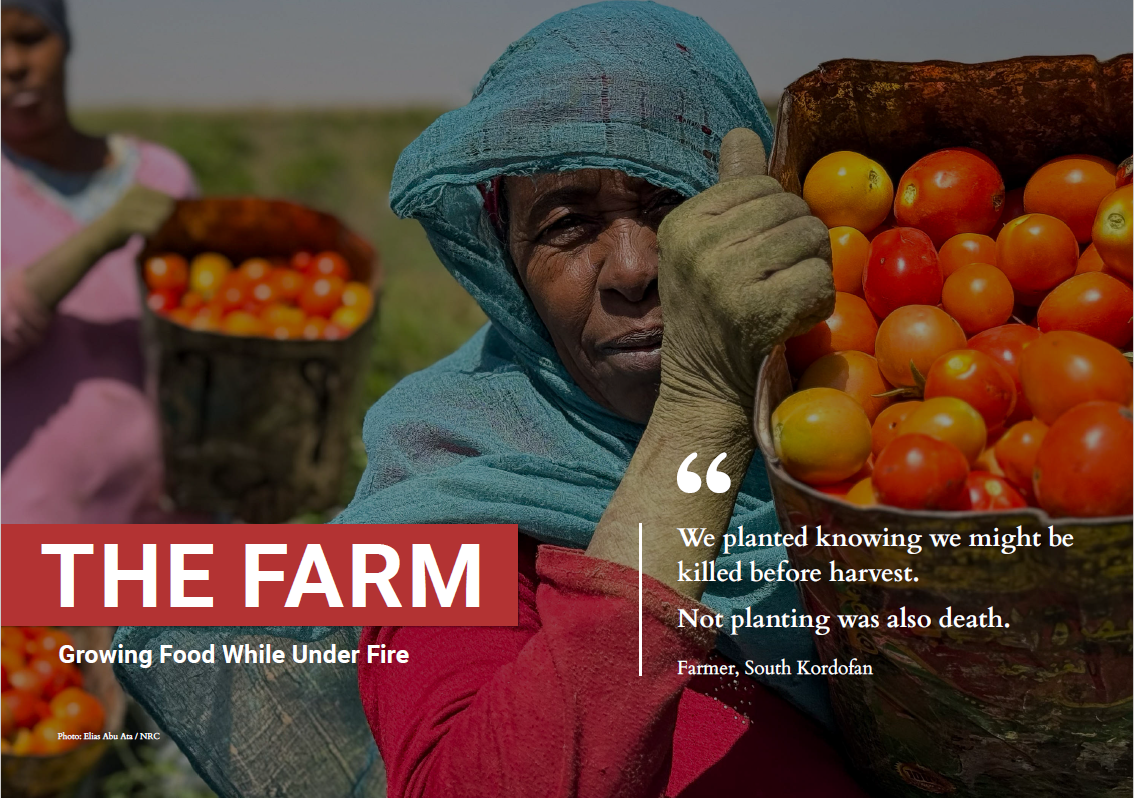
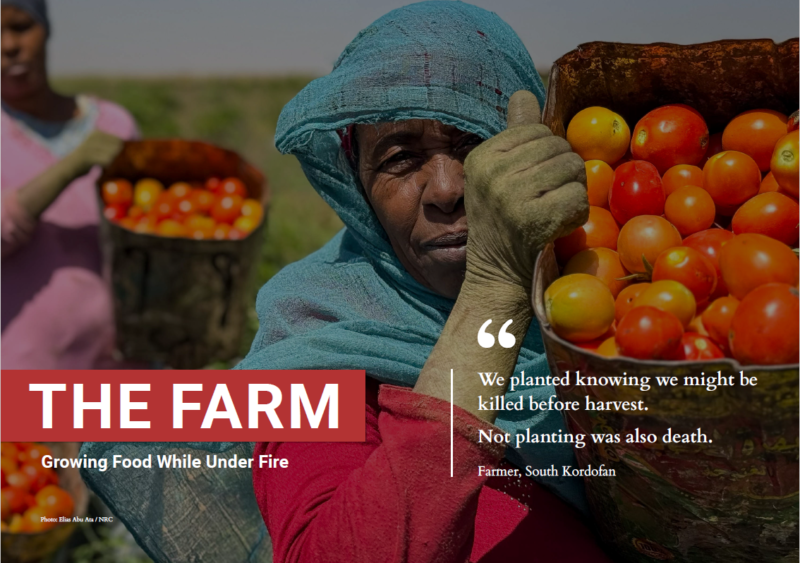
Food production itself has become a life-threatening act. Farmers plant crops knowing they may not live to harvest them. As one farmer in South Kordofan described: “We planted knowing we might be killed before harvest. Not planting was also death.”
Before the war, agriculture supported around 65% of Sudan’s population. Today, vast farmlands lie abandoned as violence forces farmers to flee, seeds are looted or destroyed, and agricultural systems collapse . Even when crops grow, they are often stolen, burned, or lost to insecurity.
Women now at the center of food production face compounded challenges. They must navigate farming, caregiving, and trading under extreme risks, including violence and lack of access to land, credit, and resources.
The Road to Hunger: Markets Under Siege
Even when food is produced, getting it to people has become another deadly obstacle. Trade routes are riddled with checkpoints, extortion, and violence. Traders face beatings, looting, and illegal taxation at gunpoint, forcing many to reduce supply or abandon routes entirely.
Markets, once the backbone of food access have been bombed, burned, or shut down. Entire supply chains have shifted, with goods now traveling from distant countries like Chad, South Sudan, and Libya through perilous and costly routes.
The result: skyrocketing food prices and shrinking availability. For many families, essential items like meat, vegetables, and oil have become unaffordable luxuries. Diets are reduced to basic grains like millet and sorghum, often of poor quality.
Starvation as a Weapon of War
Perhaps most alarming is the report’s conclusion that hunger in Sudan is not just a byproduct of conflict, it is being actively weaponized.
Evidence shows that parties to the conflict have deliberately destroyed crops, looted food supplies, blocked humanitarian aid, and besieged entire cities, cutting off access to food, water, and medicine.
In El Fasher, North Darfur, siege tactics have “deliberately deprived the population of food, water, medical care, and basic services,” dismantling the foundations of survival. Civilians attempting to escape or fetch food risk being shot by snipers or killed in crossfire.
In some cases, residents have resorted to eating animal skins from abandoned slaughterhouses or cooking only at night to avoid detection.
At the Table: Eating Less, Eating Leaves
By the time food reaches households if it does it is often insufficient, unsafe, and nutritionally inadequate.
Families dilute porridge with water to stretch portions. Many eat only once every two or three days. Women and girls, who traditionally eat last, are disproportionately affected, facing higher risks of malnutrition and starvation.
Female-headed households are three times more likely to experience food insecurity, with fewer than 2% considered food secure.
As hunger deepens, families are forced into devastating choices—selling livestock, tools, or land just to survive another day. In extreme cases, survival means consuming whatever is available, no matter how unsafe or inedible.
A Nation on the Brink of Famine
The scale of the crisis is staggering. More than half of Sudan’s population 28.9 million people is now acutely food insecure, with over 10 million facing severe or extreme hunger.
Famine has already been confirmed in areas such as El Fasher and Kadugli, with the risk spreading rapidly to other regions.
Yet, despite the urgency, humanitarian response remains critically underfunded. By the end of 2025, only 40% of required funding had been secured, forcing community kitchens to shut down or reduce meals by half.
Resilience Ruin
And still, amid devastation, Sudanese communities continue to fight for survival with extraordinary resilience.
Farmers plant under fire. Traders navigate deadly roads. Communities share food even when there is barely enough. Informal networks, women’s groups, local committees, and mutual aid systems, keep food moving against all odds.
But these efforts are stretched to their limits.
“While agencies wait for approvals, people are eating leaves. Bureaucracy is killing people.” Key informant
The report issues a stark warning: without immediate and sustained action, Sudan’s hunger crisis will deepen into a catastrophe of unimaginable scale.
It calls for an end to the use of starvation as a weapon, protection of civilians and food systems, and urgent investment in both humanitarian aid and long-term resilience.
Because in Sudan today, hunger is no longer just a symptom of war—it is one of its most devastating weapons.
Source:
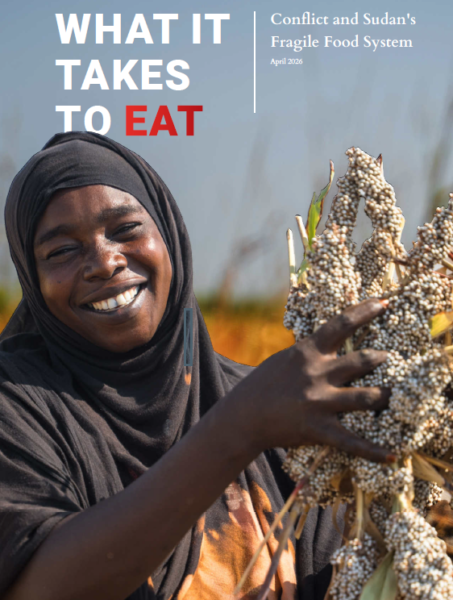
“What It Takes to Eat: Conflict and Sudan’s Fragile Food System,” April 2026 Report
#SudanCrisis #Famine #FoodSecurity #HumanitarianCrisis #WarAndHunger #Darfur #Kordofan #GlobalHealth #ConflictReporting #EMMANews #AfricaNewsChannel #AyeleAddis
ACKNOWLEDGEMENTS
This News report source was written by Nana Ndeda (Lead Researcher)
with support from Azzaa Ahmed Abdel Aziz (PhD) and
Sara Karrar on data collection and analysis.
Design and visualisations by The Advocacy Studio.
This report is made possible by the generous support of the
United States Government. The contents are the responsibility
of the Norwegian Refugee Council (NRC) and do not
necessarily reflect the views of the United States Government.
The following international non-governmental organisations
(INGOs) contributed to the review and endorsed the content:
Action Against Hunger (ACF), CARE International,
International Rescue Committee (IRC), and Mercy Corps.
The author, NRC, IRC, Mercy Corps, CARE and ACF extend
their sincere appreciation to their teams in Sudan who
facilitated the fieldwork, the hundreds of people who entrusted
them with the experiences and perspectives which shaped this
report, and to the multi-agency task team for its guidance
throughout the research and drafting process.








